Olympic Downhill Crash Reignites Debate on Athlete Risk Assessment
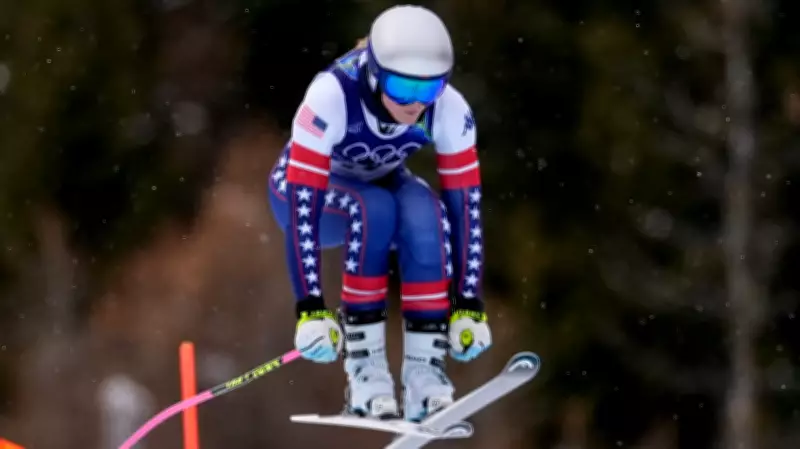
The devastating crash of American skiing legend Lindsey Vonn during the Olympic downhill in Cortina d’Ampezzo has ignited a fierce debate across the sporting world. The central question emerging from the incident revolves around whether Vonn, who had suffered a severe knee injury just nine days prior, should have been permitted to compete on a course known for its extreme danger even for fully healthy athletes.
Diverging Perspectives on Social Media and Within the Skiing Community
On social media platforms, the resounding consensus appeared to be that Vonn should not have taken to the slopes given her compromised condition. However, within the professional skiing community, the response has been markedly different, with many defending her right to make that decision herself. The 41-year-old champion had ruptured the anterior cruciate ligament in her left knee, an injury that typically sidelines professional athletes for months, though some ski racers have historically competed through similar setbacks.
Vonn arrived in Cortina last week after consulting with her medical team and trainers, ultimately deciding to proceed with racing. The International Ski and Snowboard Federation does not monitor the injury status of athletes, placing the responsibility squarely on competitors and their support networks.

Official Statements Emphasize Athlete Autonomy
FIS president Johan Eliasch addressed the situation directly on Monday, stating firmly that such decisions must remain with the individual athlete. "I firmly believe that this has to be decided by the individual athlete," Eliasch declared. "And in her case, she certainly knows her injuries on her body better than anybody else. And if you look around here today with all the athletes, the athletes yesterday, every single athlete has a small injury of some kind."
Eliasch further characterized Vonn's crash as an extraordinarily rare occurrence, describing it as "a one in a 1,000" event where she became entangled with a gate while airborne. "This is something which is part of ski racing. It's a dangerous sport," he added, underscoring the inherent risks of the discipline.
Medical Updates and Recovery Process
The Italian hospital in Treviso where Vonn received treatment confirmed that she underwent surgery to repair a broken left leg following the crash. The U.S. Ski Team has provided limited information, noting only that Vonn sustained an injury but remains in stable condition under the care of both American and Italian physicians. Initial plans for a medical update on Monday were postponed, with further information expected to come directly from Vonn's personal team.
Pierre Ducrey, sports director for the International Olympic Committee, reinforced the perspective that Vonn's participation decision was appropriately made with expert consultation. "So from that point of view, I don't think we can say that she should or shouldn't have participated. This decision was really hers and her team to take," Ducrey explained.
Fellow Athletes Defend Vonn's Decision-Making
Speculation on social media suggested that Vonn's previously injured knee might have contributed to the crash, particularly on the Olympia delle Tofana course where she holds a remarkable record of twelve World Cup victories. However, her teammate Keely Cashman strongly refuted this theory. "Totally incorrect," Cashman stated. "People that don't know ski racing don't really understand what happened yesterday. She hooked her arm on the gate, which twisted her around."
Cashman, who herself experienced a serious crash five years ago that left her unconscious, emphasized that the incident was unrelated to Vonn's ACL injury. "That has nothing to do with her ACL, nothing to with her knee," she clarified.

The Broader Conversation About Risk in Elite Sports
The hours following Vonn's crash were filled with second-guessing and questioning whether someone should have intervened to prevent her participation. Italian skier Federica Brignone, who returned to competition after suffering multiple leg fractures in April, defended athlete autonomy. "It's her choice," Brignone asserted. "If it's your body, then you decide what to do, whether to race or not. It's not up to others. Only you."
American downhiller Kyle Negomir echoed this sentiment, highlighting Vonn's unparalleled expertise and right to assess her own capabilities. "Lindsey's a grown woman, and the best speed skier to ever do this sport. If she made her decision, I think she should absolutely be allowed to take that risk," Negomir said. "She's obviously good enough that she's capable of pulling it off."
This incident has sparked a crucial conversation about the balance between athlete autonomy, medical oversight, and the inherent dangers of elite winter sports, particularly as athletes push physical boundaries in pursuit of Olympic glory.