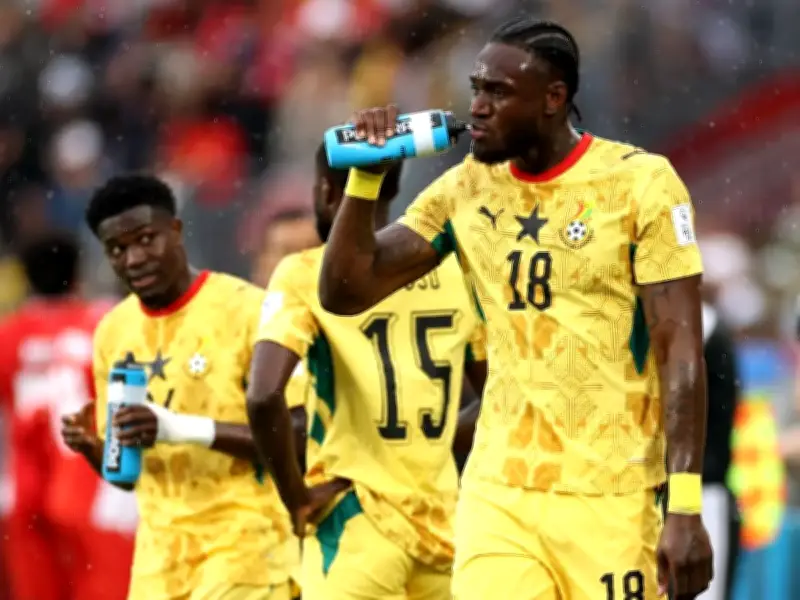
The rain was pouring, the wind was picking up, and fans at Toronto Stadium were singing at full throat despite the conditions by Lake Ontario. Yet, 22 minutes into the World Cup opener between Ghana and Panama, referee Glenn Nyberg halted play for a three-minute hydration break.
The break, sponsored by Powerade and mandated by FIFA, came after Ghana captain Jordan Ayew was knocked to the pitch and the ball went out of play. Fans booed loudly as the countdown began, and television viewers were treated to advertisements.
When play resumed, the crowd was noticeably less lively for several minutes, and the momentum on the pitch had dulled. It took pressure from Ghana in Panama's final third to bring the roars back.

This hydration break is the latest example of these newly mandated delays causing issues at the tournament. Critics argue the breaks are unnecessary in cooler, rainy conditions and disrupt the flow of the game.
How Teams Have Used the Breaks
Norway used a second-half hydration break to make four substitutions and completely alter their strategy, moving to a three-at-the-back formation. The change paid off handsomely against Iraq, with Norway scoring their third goal shortly after.
During some matches, referees checked with off-field officials about when to restart while players waited on the field. This was especially apparent during Germany vs. Curacao at Houston Stadium, a facility with a roof and air conditioning, where players waited patiently.
Player and Fan Reactions
Netherlands captain Virgil van Dijk criticized the breaks after his team's draw with Japan. “I think for neutral watchers on TV, it's also not great. If it's really hot, obviously it would be good to put them in. But I think you have to look at it in every game separately,” he said.
Players, managers, fans, and pundits have spoken out against the controversial breaks. FIFA claims they are instituted for every game out of fairness—if one game requires them, all should have them.
Why Does the World Cup Have Hydration Breaks?
Last December, FIFA announced it would use hydration breaks to “prioritize player welfare.” The organization said it would use a “streamlined and simplified version” of breaks used in previous tournaments, including the FIFA Club World Cup in the U.S.
Referees stop games roughly 22 minutes into each half for a three-minute break, regardless of conditions. “For every game, no matter where the games are played, no matter if there's a roof, or temperature-wise, there will be a three-minute hydration break,” said Manolo Zubiria, Chief Tournament Officer for FIFA World Cup 2026.
TV Networks Benefit from Added Ads
A report from Front Office Sports revealed that these mandated breaks are benefiting TV executives. Fox and Fox Sports stand to earn an additional $250 million US from the added ad time. Fox has been called out for abusing the breaks to pipe in full-screen ads but has not faced formal discipline from FIFA.