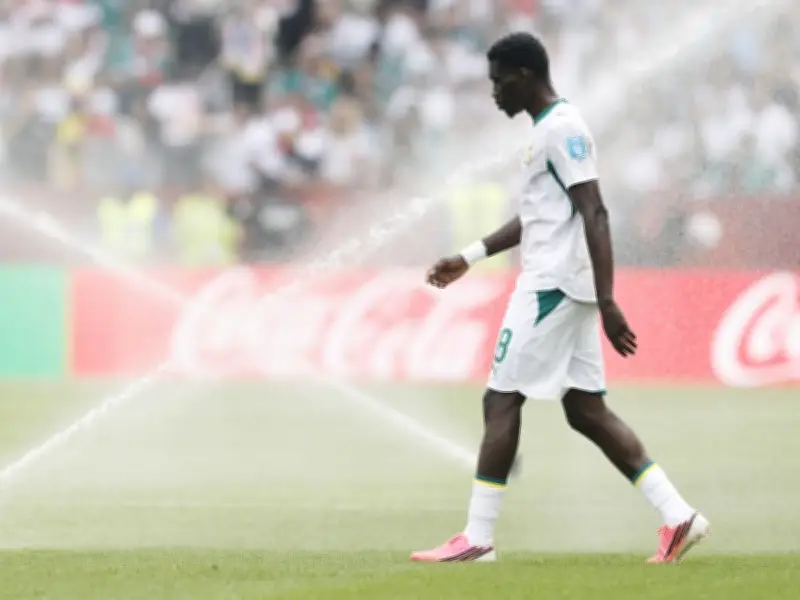
During Friday's World Cup match between Senegal and Iraq at Toronto Stadium, the referee halted play roughly 22 minutes into each half, sending players to the sidelines as field sprinklers watered the pitch. Boos again sprinkled down from the crowd, but this time, the official announcements that had accompanied the breaks during the first four games at the venue were conspicuously absent.
FIFA's Quiet Change
The hydration breaks themselves remained, but without the loudspeaker cue, fans lacked a focal point for their jeers. Instead, the stadium played music, showed live shots of dancing fans, and displayed Powerade branding on videoboard ribbons. The change suggests FIFA or local organizers may have responded to the backlash that met each previous break announcement.
At earlier matches, the official call for the hydration break was met with loud boos from tens of thousands of attendees. The sponsor, Powerade, likely preferred not to have its name blasted over speakers toward angry fans. Without the announcement, the break felt more like a natural pause to uninitiated spectators, artificially splitting the match into four quarters.

Why FIFA Mandates Hydration Breaks
FIFA announced in December that it would use hydration breaks during the 2026 World Cup to "prioritize player welfare," employing a "streamlined and simplified version" of breaks used in previous tournaments, including the FIFA Club World Cup in the U.S. last summer.
"For every game, no matter where the games are played, no matter if there's a roof, (or) temperature-wise, there will be a three-minute hydration break. It will be three minutes from whistle to whistle in both halves," said Manolo Zubiria, Chief Tournament Officer, USA, for the FIFA World Cup 2026.
Criticism From All Sides
The breaks have drawn heavy criticism from players, coaches, and fans. Many argue they are unnecessary, especially in matches where conditions don't warrant them. During last Wednesday's match between Ghana and Panama in Toronto, it was steadily raining during both breaks. The only match to skip a hydration break was France vs. Iraq, which was interrupted by a thunderstorm and lightning delay at halftime.
"You would be hard-pressed to find a person (who doesn't stand to gain financially from the breaks) that likes to see matches ground to a halt via this added mandate," noted observers.
FIFA President Defends Breaks
Despite the backlash, FIFA appears committed to keeping the breaks. Earlier this week, FIFA President Gianni Infantino said the organization is considering adding hydration breaks to all future World Cups.
Infantino praised the stoppages, saying, "Maybe the coach can reassess certain situations, correct certain mistakes. The players get a little rest and come back in full speed. Well, is that bad necessarily? Maybe it's good." He added, "We see as well the intensity of the games. We've never seen 90 minutes in a tournament like this played in such an intensity. Until the last second of the match, players attack and so on. And maybe, maybe not, but maybe it's also a bit thanks to this little break."
What's Next for Hydration Breaks
FIFA will use the experience from this summer's tournament to gauge the need for breaks going forward. For now, the breaks continue, albeit with less fanfare. Fans watching at home see full-screen commercial breaks, providing additional revenue for broadcasters and sponsors. The question remains whether FIFA will eventually bow to public pressure or entrench the breaks permanently.