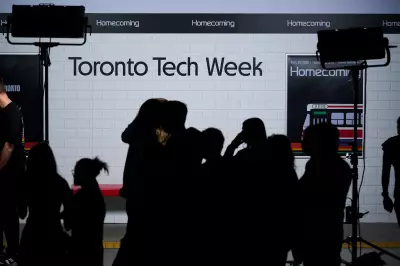
On a snowy December morning in Toronto, Evan Solomon, Canada's inaugural Minister of Artificial Intelligence and Digital Innovation, is a man in motion. Amidst the hum of a multi-million-dollar quantum computer, he moves through a crowd of tech CEOs and reporters, launching a pivotal initiative. His mission, stark and clear, is to ensure Canada masters the AI revolution on its own terms.
The Pragmatic Path to Tech Sovereignty
Solomon was there to unveil the Canadian Quantum Champions Program (CQCP), a landmark effort committing up to $92 million to fund four domestic quantum companies. The goal is explicit: to anchor companies, talent, and intellectual property within Canada. This initiative is a cornerstone of the Carney government's bet that AI and emerging technologies like quantum computing can lift the nation from its economic and productivity challenges.
"(AI) is going to be vitally important to the world in every way, shape and form," Solomon stated, rejecting both utopian hype and dystopian fear. "This technology is coming. It's transforming our economy (and) the global economy. We need to master this and do it on our own terms."

Yet, public sentiment remains a hurdle. A September poll by Abacus Data found 61 per cent of Canadians believe AI threatens jobs, privacy, and societal stability. Furthermore, a November KPMG study revealed that while Canadian businesses are adopting AI en masse, only two per cent are seeing a return on their investments.
Building Trust and a National Strategy
Solomon, a former journalist who co-founded the tech magazine Shift in the 1990s, draws parallels between AI's current trajectory and the internet's early days. He believes time and trust are the formula for soothing public anxiety. A key milestone in building that trust will arrive in January with the release of an updated national AI strategy blueprint.
The strategy's foundation was informed by a 30-day national "sprint" in November, involving a 28-member task force and feedback from over 11,300 Canadians. Solomon emphasized that trust and data security were central themes. The renewed plan will focus on four critical pillars:
- Compute: Access to computational resources and data centres.
- Customers: Driving mass AI adoption.
- Capital: Funding for scale and growth.
- Talent: Educating and upskilling the workforce.
The government is already acting as a key customer. The $300 million Compute Access Fund (CAF), launched last December, received 1,300 applications—far more than the anticipated 300. The first tranche of funding is slated for distribution early in the new year.
Champions, Sovereignty, and the American Shadow
Solomon is clear about backing national champions. He singled out Toronto's Cohere Inc., a builder of foundational AI models, as a strategically vital Canadian player. "The Americans (and) Chinese have a bunch. The French have one. Canada has one — Cohere. We believe that we need to have a Canadian champion there," he asserted.
Defining digital sovereignty is perhaps Solomon's most delicate task, performed under the long shadow of U.S. tech dominance. Ottawa's approach is not about complete isolation but about creating secure, pragmatic partnerships. This is illustrated by the $240 million from Canada's sovereign AI compute fund going toward a Toronto data centre whose anchor tenant is Cohere but which will be built by U.S.-based CoreWeave Inc.
Solomon addressed concerns about recent major investments, like Microsoft Corp.'s $7.5 billion expansion of its AI data centre infrastructure in Canada, by insisting contractual terms and encryption will protect Canadian data from foreign laws like the U.S. Cloud Act. "You control the key," he explained.
Looking Ahead to 2026
Solomon pushes back against the narrative that Canada has squandered its early AI lead. "We were first in AI. The fact that the world has rushed to catch up doesn't mean we've lost our way," he said, adding that Canada is also "in the lead" in quantum technologies.

He pointed to $334 million allocated to quantum in Budget 2025 and argued that the first stage of the new quantum champions program offers more funding than the initial phases of a comparable U.S. Defense Department initiative.
For the year ahead, Solomon promises progress on multiple fronts:
- New privacy and data legislation.
- Advancing the quantum champions program to a potential Phase Two.
- Finalizing definitions of digital sovereignty with tiered requirements for different data types.
- Deepening global partnerships with allies like the U.S., EU, and UAE.
His vision for a Canadian tech future is distinctly pragmatic. While the U.S., China, and Europe pursue their own paths, Solomon bets that Canada's "calculated, safe, yet innovative way forward"—one that prioritizes security, jobs, and education—will be its winning formula. The success of this ambitious blueprint will determine if Canada can truly transform into the innovation superpower its first AI minister envisions.