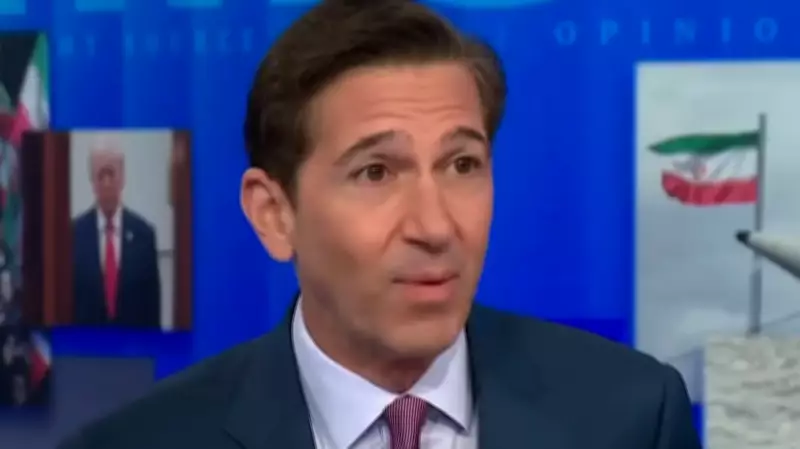
In a striking analysis of modern information warfare, MSNBC justice and intelligence correspondent Ken Dilanian asserted that President Donald Trump's own statements have likely inflicted more damage on America's global reputation than the viral artificial intelligence-generated propaganda videos produced by Iran. Dilanian made these comments during an appearance on "Katy Tur Reports" this Friday, describing the Iranian videos as "very clever" and culturally impactful.
The Propaganda Battlefront
Dilanian highlighted the irony that America, the nation which invented both the internet and artificial intelligence, is now being outmaneuvered in the digital propaganda arena by what he termed a "murderous, theocratic regime." The Iranian videos, which have parodyed figures including Trump and Defense Secretary Pete Hegseth, are crafted in English and leverage British rap lyrics to directly target perceived weaknesses in the Trump administration's arguments.
A Billion Views and Counting
These Lego-themed productions are far from subtle, employing laser-focused satire. One video depicts Trump confronted by documents labeled "Epstein Files" as a voice raps about leaking secrets. Another shows George Floyd under an officer's boot, with lyrics claiming Iran stands with those wronged by the American system. Perhaps the most viral installment exclusively targets Hegseth, portraying a drunken Lego figure accused of sexual abuse lying on the floor, accompanied by explicit rap lyrics.

"By one count, they racked up more than a billion views on X alone," Dilanian noted, underscoring their massive reach. He contrasted this with Trump's own history of staggering posts and comments, suggesting that while the president's rhetoric is harmful, the Iranian videos have evolved into a significant cultural phenomenon.
Behind the Scenes
The propaganda war is not one-sided. The White House has frequently released videos celebrating U.S. airstrikes, blending AI-generated imagery with real footage of Iranian targets, which Trump himself has shared. However, Dilanian implied that Iran's content is proving far more effective. This effectiveness is partly attributed to a diminished U.S. counter-propaganda capability.
U.S. Response Gap
"The U.S. has no answer because, in part, the State Department disbanded some of the organizations that were designed to flag and counter foreign propaganda," Dilanian explained. This observation aligns with a recent Guardian report detailing the Trump administration's closure of the "Counter Foreign Information Manipulation and Interference" hub, described as the State Department's last bulwark against foreign disinformation campaigns.
The BBC recently interviewed a representative from Explosive Media, an Iran-based group involved in creating these videos. The individual, who requested to be called "Mr. Explosive," initially claimed total independence before admitting the Iranian regime is a "customer," highlighting the blurred lines between independent creators and state-sponsored influence operations.
Dilanian's analysis paints a picture of a digital age where cutting-edge technology, wielded by adversarial states, can craft compelling narratives that resonate globally, potentially overshadowing the self-inflicted image damage from a sitting president's own words.