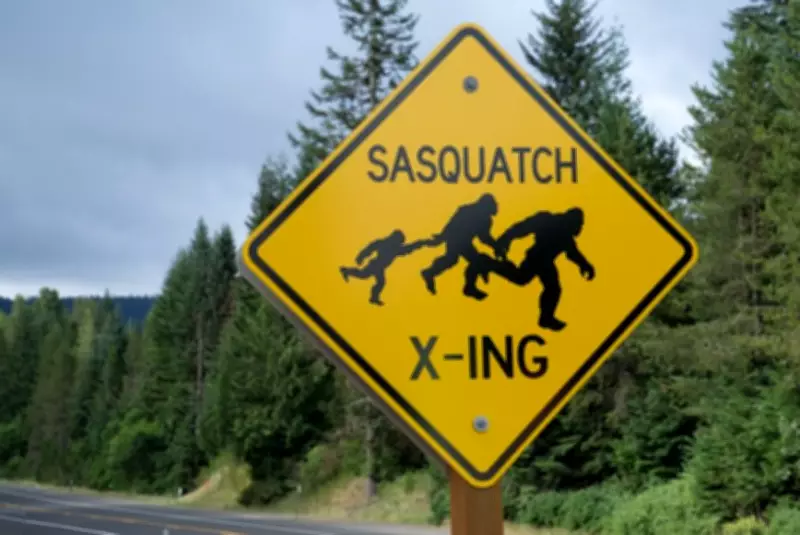
In an unusual crossover between cryptozoology and probability analysis, the online gambling observer BetCanada.com recently turned its attention to the elusive Sasquatch. The website discovered a table hosted by the Bigfoot Field Researchers Organization (BFRO) that meticulously documents sightings across U.S. states and Canadian provinces.
From Mythical to Mathematical
With its stark black background and white text, the BFRO website presents an almost otherworldly aesthetic, fitting for its subject matter. BetCanada.com's contributing editor, Jim Tomlin, seized upon this data with a gambler's characteristic boldness, blurring the lines between folklore and statistics to extrapolate coast-to-coast-to-coast odds for encountering the legendary creature.
Canadian Provincial Breakdown
The odds were calculated based purely on the number of reported incidents. British Columbia emerged as the overwhelming favorite, with its dense forests yielding 135 reported sightings—nearly as many as all other provinces and territories combined. This volume earned B.C. the flattest odds at +500.

Ontario followed with 68 incidents, resulting in odds of +600. However, on a per-capita basis, Alberta and Manitoba presented strong cases at +700 each, as did New Brunswick at +850. Saskatchewan, despite its phonetically suggestive name, tied with the Yukon at +900. Quebec and Nova Scotia rounded out the list at +1,000 and +1,650 respectively.
American Hotspots and Surprises
Looking south of the border, the data revealed several concentrated areas of Sasquatch activity. California led with 467 reports, followed by Florida at 346 and Illinois at 305. The most startling entry was Washington, D.C., which topped the list with 730 reported sightings—the most recent occurring this summer—making it the number one hotspot by a significant margin.
This peculiar analysis serves as a reminder that while the existence of Bigfoot remains unproven, the human fascination with the creature continues to generate intriguing data and unexpected statistical exercises.