The stark reality of China's overwhelming dominance in green technology has delivered what officials describe as a "bitter awakening" for Western nations. European companies, which pioneered much of the foundational technology for renewables, now watch as Chinese manufacturers control global supply chains. This shift raises a critical question: has the West left it too late to compete?
From Pioneers to Suppliers: The Early Days
The story of this reversal begins decades ago. In the late 1980s, Denmark's Bonus Energy celebrated a landmark deal, shipping 13 wind turbines to China's Xinjiang region via the Trans-Siberian railway. Henrik Stiesdal, a key figure in wind turbine development, recalls the project was a proof of concept to show Chinese officials the technology was reliable. The deal was even sweetened with development aid from Denmark's Danida agency.
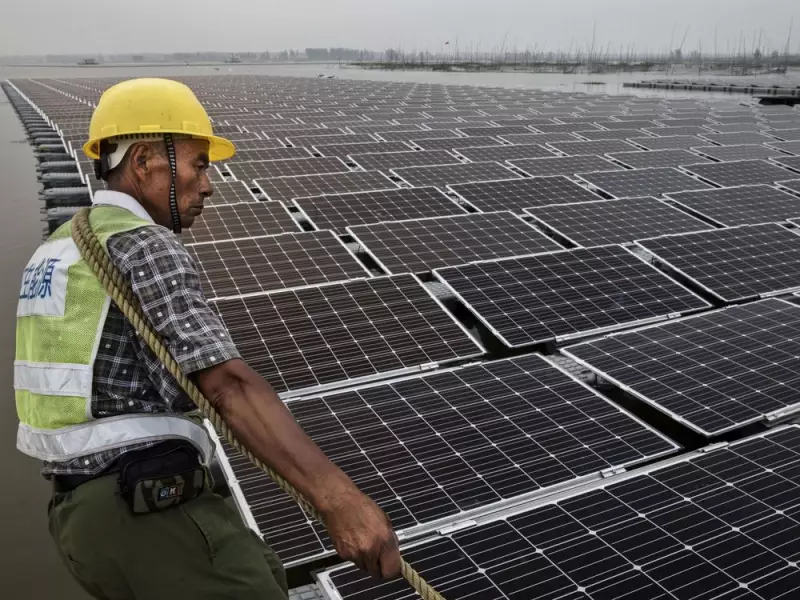
This early cooperation symbolized Western leadership. Yet, nearly four decades later, the tables have turned completely. China now supplies over 90% of the world's solar panels, dominates battery supply chains, and controls the processing of critical rare earth materials. Its massive manufacturing scale has driven down solar costs dramatically, accelerating global adoption but also pushing many U.S. and European solar manufacturers into bankruptcy.

The Cost of Complacency and Open Markets
Industry veterans point to a fundamental strategic misstep. "We created the market [for solar] and made it interesting for investors," says Eicke Weber, former co-chairman of the European Solar Manufacturing Council. "But we forgot to make industrial policies." While the West bet on open markets and globalization, China executed a long-term national industrial strategy, prioritizing clean energy technologies for scale and commercial dominance.
Geoffrey Pyatt, a former U.S. assistant secretary of energy, summarizes the Western position bluntly: "We all were asleep at the switch." The experience has become a central lesson for policymakers in Europe and the U.S., who are now scrambling to craft responses to China's industrial might.
Can the West Protect What's Left?
The pressing issue now is whether recent shifts toward industrial policy in the West can recover lost ground. The solar manufacturing sector in Europe is largely considered gone. The focus has shifted to protecting remaining industries. Europe's wind turbine manufacturers still lead outside China, but face intensifying competition from Chinese giants like Goldwind, the successor to Xinjiang Wind Energy Corporation.
Analyst Michal Meidan from the Oxford Institute for Energy Studies notes the differing stakes: "In both wind and even the auto sector, Europe still has an industry that it could protect. In solar, that's gone." The recognition of China's dominance forces Western governments to confront three key questions: how they lost the commercialization race despite early innovation, how China scaled so effectively, and whether their new policies can alter the current trajectory.
The green tech race is no longer just about climate solutions; it's a core battleground for economic supremacy and industrial resilience in the 21st century.