A revolutionary development in computing technology is poised to transform the digital landscape, and surprisingly, it has nothing to do with artificial intelligence. IBM researchers have unveiled their experimental quantum processor called Loon, marking what experts are calling a seismic shift in computational capabilities.
The Quantum Leap Forward
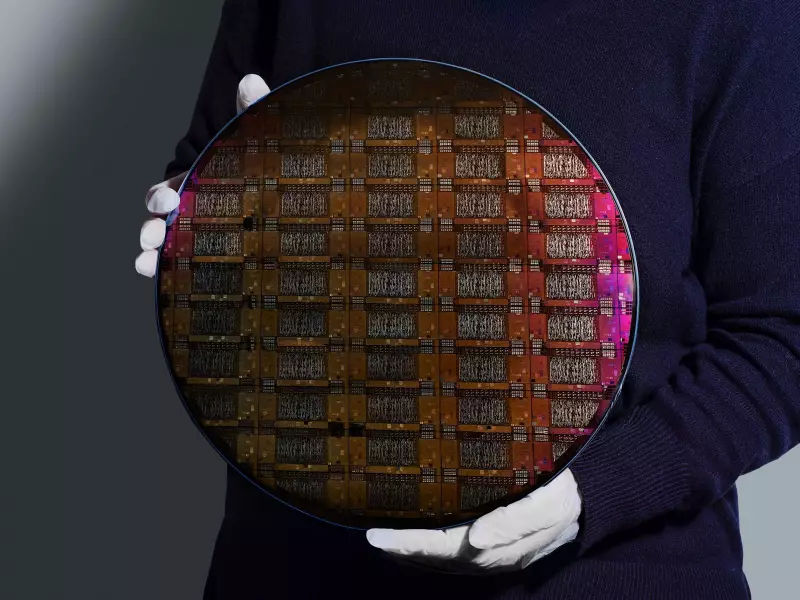
IBM researchers recently demonstrated the wafer for the company's Loon experimental quantum processor. This slice of silicon represents the foundation for creating advanced processors and chips that could fundamentally change how we process information. Unlike traditional computers that use bits representing either 0 or 1, quantum computers use qubits that can exist in multiple states simultaneously, enabling exponentially greater processing power for specific types of calculations.
The development comes at a crucial time when traditional computing approaches are facing physical limitations. Moore's Law, which predicted the regular doubling of transistors on microchips, is reaching its practical limits, making quantum computing increasingly essential for future technological progress.

Beyond Artificial Intelligence
While artificial intelligence has dominated technology headlines in recent years, quantum computing represents a fundamentally different approach to computational challenges. Where AI focuses on pattern recognition and machine learning, quantum computing tackles problems that are practically impossible for classical computers to solve within reasonable timeframes.
Potential applications include drug discovery, where quantum computers could simulate molecular interactions with unprecedented accuracy; climate modeling, enabling more precise predictions of complex environmental systems; and cryptography, potentially rendering current encryption methods obsolete while creating new, more secure alternatives.
The Road to Practical Quantum Computing
IBM's Loon processor represents significant progress in making quantum computing more practical and accessible. The technology faces substantial challenges, including maintaining quantum coherence—the fragile state that allows qubits to perform their unique computations—and scaling up the number of qubits while minimizing errors.
Research institutions and technology companies worldwide are racing to overcome these hurdles. The demonstration of the Loon processor wafer indicates that IBM is making tangible progress toward creating more stable and powerful quantum systems that could eventually outperform classical computers for specific tasks.
The timing of this development, announced on November 12, 2025, positions quantum computing as the next frontier in technological innovation, potentially creating new industries and transforming existing ones in ways we're only beginning to imagine.