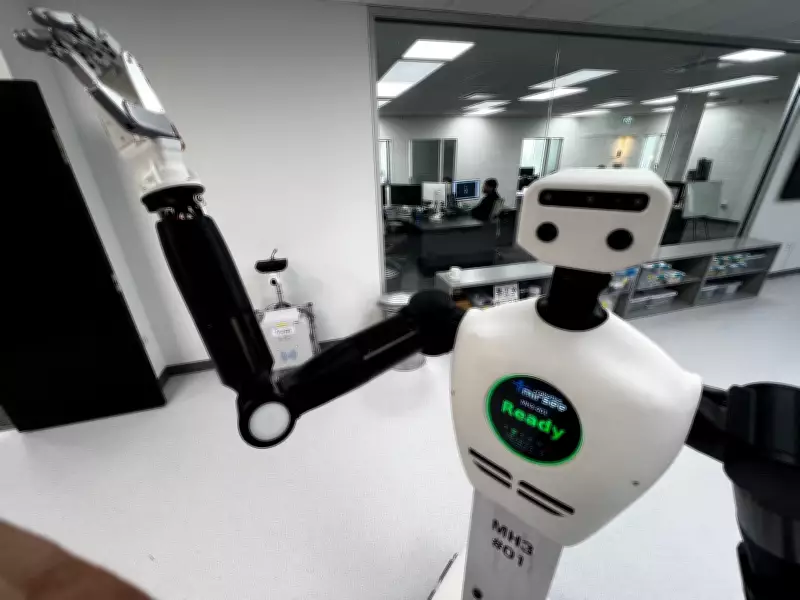
Canadian Team Races to Develop Next-Generation AI-Powered Humanoid Workers
In a groundbreaking initiative, a dedicated Canadian research team is spearheading the development of advanced AI-powered humanoid robots, specifically engineered for deployment in warehouse and factory settings. This ambitious project aims to revolutionize industrial automation by creating intelligent machines capable of performing complex tasks with unprecedented efficiency and adaptability.
The MH3 Humanoid Robot: A New Era in Industrial Automation
The centerpiece of this effort is the MH3 humanoid robot, a sophisticated machine designed to operate seamlessly within demanding industrial environments. Unlike traditional robotic systems, the MH3 leverages cutting-edge artificial intelligence to navigate dynamic workspaces, handle diverse materials, and collaborate safely with human workers. This represents a significant technological leap, moving beyond simple automation to create truly intelligent assistants that can learn and adapt in real-time.
Strategic Importance for Canadian Innovation
This project underscores Canada's growing prominence in the global artificial intelligence and robotics sectors. By focusing on practical applications in logistics and manufacturing, the team is addressing critical industry needs while positioning the country as a leader in next-generation automation solutions. The development of such AI-powered workers has the potential to enhance productivity, reduce operational costs, and improve workplace safety across numerous sectors.

Technical Challenges and Future Prospects
Building a functional AI-powered humanoid involves overcoming substantial technical hurdles, including advanced sensor integration, real-time decision-making algorithms, and robust mechanical design. The Canadian team is tackling these challenges head-on, drawing on expertise from fields such as machine learning, computer vision, and mechanical engineering. As the project progresses, it is expected to yield innovations that could influence robotics far beyond industrial applications, potentially impacting healthcare, disaster response, and service industries.
The race to develop these next-generation workers is not just about technological achievement; it reflects a broader shift towards intelligent automation that could reshape the future of work. With continued investment and research, Canada's efforts in this domain may soon set new standards for what is possible in human-robot collaboration and industrial efficiency.