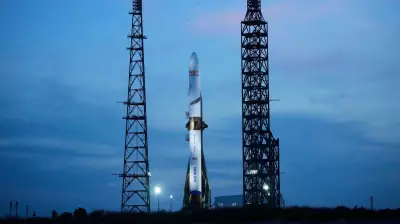
NASA Artemis II Astronauts Prepare for Historic Lunar Flyby
The NASA Artemis II mission is poised to achieve a monumental milestone in space exploration as its four-astronaut crew prepares for a close lunar flyby on Monday. This event marks the closest approach humans have made to the moon in over five decades, with the crew scheduled to pass within approximately 4,066 miles of the lunar surface.
Timing and Significance of the Flyby
The historic flyby is set to commence just after 7 p.m. New York time on Monday, following a several-hour observation period. During this time, the astronauts will capture images of the moon's far side—a perspective never visible from Earth. NASA officials have emphasized that this moment represents the pinnacle of the Artemis II mission, which launched on April 1, 2026.
The crew includes NASA astronauts Reid Wiseman, Victor Glover, and Christina Koch, along with Canadian astronaut Jeremy Hansen. Their mission serves as a critical rehearsal for future lunar landings, testing vehicles and systems intended to support human missions to the moon's surface within the next two years.

Breaking Space Travel Records
Prior to the lunar flyby, the Artemis II crew is expected to break the record for the farthest distance humans have traveled in space. This achievement, scheduled for around 2 p.m. New York time on Monday, will surpass the distance reached by the Apollo 13 crew in 1970.
While NASA has downplayed the significance of this record, mission control features a countdown clock tracking the milestone. "You want every mission to keep exploring and keep learning new things," said Emily Nelson, NASA's chief flight director, in a pre-launch news conference. "Getting farther from Earth than we've ever been before is a fun statistic, but there are a lot of other things we're going to learn on this mission that are going to be a lot more exciting."
Observation and Imaging Details
The official flyby period will begin at 2:45 p.m. New York time, when the Lockheed Martin-built Orion capsule will orient its windows toward the moon. This positioning allows the crew to start observations and photography. From their vantage point, the moon will appear roughly the size of a basketball held at arm's length.
NASA is particularly excited about the potential for human observation of the moon's far side. "It turns out there's about 60% of the far side that has never been seen by human eyes because of the lighting conditions," explained mission commander Reid Wiseman. "Apollo always wanted that light on the front side of the moon for their landing and launch capabilities."
Flight director Judd Frieling highlighted the value of human vision, calling eyes "the best cameras in the universe" for capturing unique lunar perspectives.
Mission Context and Future Implications
This flyby represents a crucial step in NASA's Artemis program, which aims to return humans to the lunar surface and establish sustainable exploration. The data and experience gained from Artemis II will directly inform planning for Artemis III, the mission intended to land astronauts on the moon.
The successful execution of this flyby demonstrates significant progress in space technology and international collaboration, with Canadian participation underscoring the global nature of modern space exploration. As the crew approaches this historic moment, they carry forward a legacy of lunar exploration while paving the way for future discoveries.