Artemis II Mission Enters Critical Phase with Dramatic Earth Return
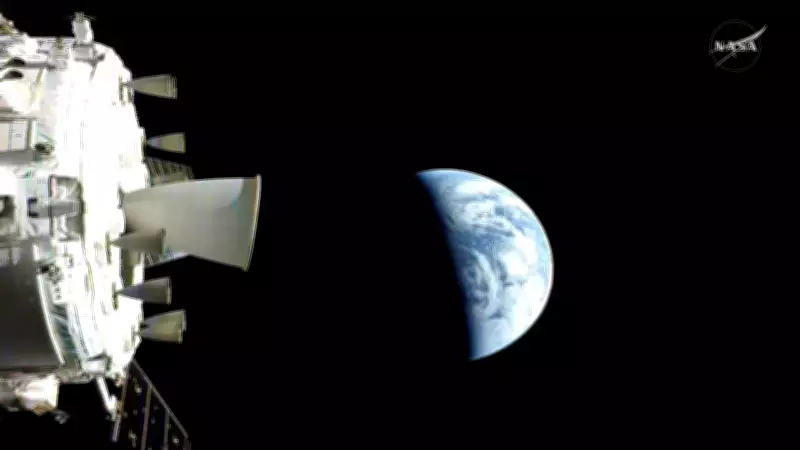
The Artemis II mission, a landmark crewed lunar flyby, is now on a precise trajectory for its highly anticipated and dramatic return to Earth. NASA officials confirm that the spacecraft is on course, with all systems functioning optimally as it approaches the most perilous segment of its journey. The crew, consisting of four astronauts, is preparing for the intense physical and technical challenges of re-entering Earth's atmosphere, a phase described by experts as the mission's most dangerous part.
High-Stakes Re-entry and Splashdown Procedures
As Artemis II nears Earth, the crew will experience extreme gravitational forces, potentially feeling pressure equivalent to four times their body weight during atmospheric entry. This intense deceleration is a critical aspect of the return, designed to slow the capsule from orbital speeds to a safe velocity for splashdown. An animated simulation released by NASA vividly illustrates the crew's journey back, highlighting the rapid sequence of events once the capsule hits the atmosphere.
"Once Artemis II enters Earth's atmosphere, things get very exciting, very fast," noted a mission risk analyst, emphasizing the swift and dynamic nature of re-entry. The process involves precise navigation through atmospheric layers, with temperatures on the spacecraft's heat shield soaring to thousands of degrees Celsius to protect the crew from the intense friction.

Emotional and Technical Preparations
The emotional toll on the astronauts' families is palpable, with one spouse describing the wait as "a constant hum of anxiety." Meanwhile, NASA is coordinating live coverage of the splashdown, expected to occur in a designated ocean zone, where recovery teams will be stationed to retrieve the crew and capsule immediately after touchdown.
This mission phase follows the successful completion of lunar orbit operations, marking a significant step in NASA's Artemis program aimed at returning humans to the Moon. The re-entry and splashdown are pivotal for validating spacecraft systems and crew safety protocols for future deep-space missions.
Updates on the mission's progress are being streamed live, allowing global audiences to witness this historic event. The Artemis II return not only showcases advancements in space technology but also sets the stage for subsequent Artemis missions targeting lunar surface exploration.