Artemis II Astronauts Complete High-Stakes Return to Earth
The four crew members of NASA's Artemis II mission have successfully returned to Earth, splashing down in the Pacific Ocean after a historic journey around the moon. Their spacecraft pierced through Earth's atmosphere at tremendous speed, subjecting the astronauts to forces up to four times their body weight during the dramatic re-entry phase.
The Most Dangerous Phase of the Mission
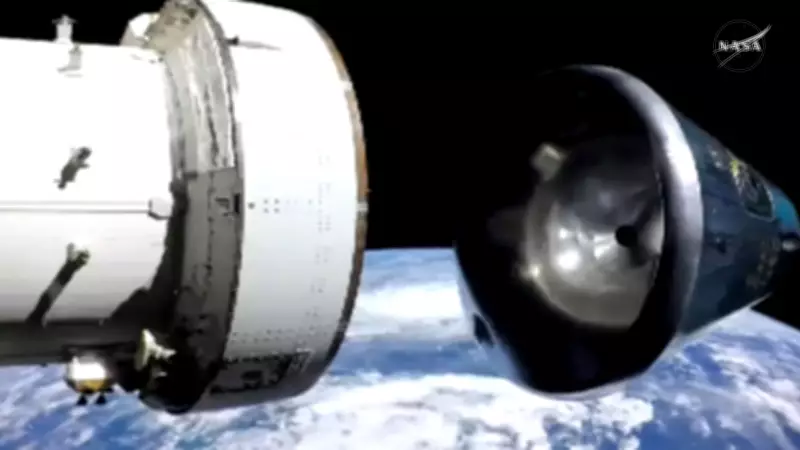
As former astronaut Chris Hadfield explained prior to the return, "The crew could feel pressure four times their weight entering Earth's atmosphere." This intense gravitational force occurs as the Orion capsule decelerates from approximately 25,000 miles per hour to just 300 miles per hour within minutes, generating extreme heat that requires the spacecraft's heat shield to withstand temperatures approaching 5,000 degrees Fahrenheit.
The re-entry represents what mission controllers described as "the most dangerous part" of the entire Artemis II journey. Unlike previous missions, Artemis II's return profile included unique navigational challenges and thermal protection requirements due to the spacecraft's higher velocity upon returning from lunar distance.

Celebrations Across North America
Across Canada and the United States, space enthusiasts gathered to witness the historic return. The Canadian Space Agency headquarters hosted a watch party for the splashdown, while in Edmonton, residents expressed excitement about the mission's conclusion. Canadian astronaut Jeremy Hansen, who participated in the mission, had previously answered questions from Calgary students while in space, highlighting the educational outreach component of the Artemis program.
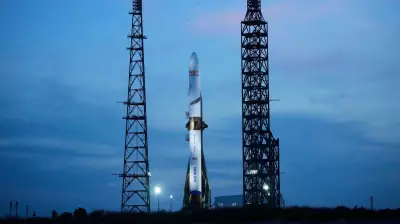
The successful return marks a critical milestone for NASA's Artemis program, which aims to return humans to the lunar surface by the mid-2020s. The Artemis II mission served as the first crewed test of the Orion spacecraft and Space Launch System rocket combination, validating systems for future lunar landings.
What Comes Next for the Crew and Program
Following their Pacific Ocean splashdown, recovery teams retrieved the astronauts and transported them for medical evaluation. The crew will undergo extensive debriefings and health monitoring in the coming weeks as scientists study the effects of deep space travel on the human body.
Data collected during Artemis II's re-entry will inform preparations for Artemis III, which plans to land astronauts near the lunar south pole. The successful return demonstrates the spacecraft's ability to protect crew members during the violent atmospheric entry phase, building confidence for future missions to the moon and eventually Mars.
NASA officials emphasized that this achievement represents a collective international effort, with contributions from the Canadian Space Agency, European Space Agency, and other global partners. The mission's success comes as space agencies worldwide accelerate their lunar exploration initiatives, marking a new era of human spaceflight beyond low Earth orbit.