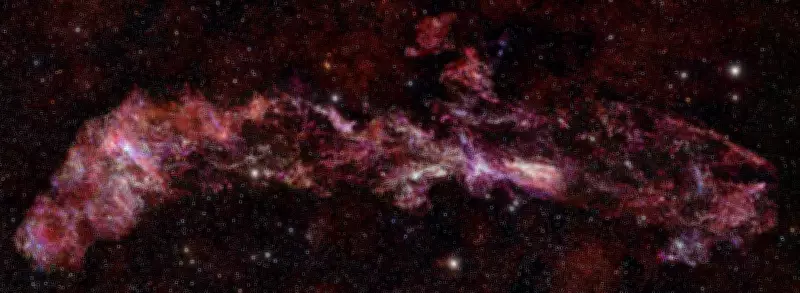
Astronomers have achieved a remarkable breakthrough in space observation, capturing the most detailed image to date of the center of our galaxy, the Milky Way. This unprecedented view provides new insights into the complex dynamics and composition of the galactic core.
Unveiling the Galactic Heart
The image was obtained using the ACES instrument, which mapped the cold gas within the Central Molecular Zone in motion. By employing sophisticated spectroscopy techniques, researchers were able to identify various chemical species and measure gas velocities, represented by different colors in the photograph.
This detailed mapping allows scientists to study the intricate processes occurring at the galaxy's center, including star formation, gas dynamics, and the interactions between different molecular components. The Central Molecular Zone is a region of intense activity, hosting a supermassive black hole and serving as a nursery for new stars.

Technological Advancements in Astronomy
The achievement was made possible through the collaborative efforts of international observatories, including ALMA (the Atacama Large Millimeter/submillimeter Array), operated by ESO, NAOJ, and NRAO. The advanced capabilities of these facilities enable astronomers to peer deeper into space with greater clarity than ever before.
Spectroscopy, the technique used to create this image, analyzes the light emitted or absorbed by materials to determine their chemical composition and motion. By applying this method to the galactic center, researchers can now track how gases move and interact in this critical region of our galaxy.
Implications for Galactic Understanding
This detailed image represents a significant step forward in our understanding of galactic structure and evolution. The data collected will help astronomers answer fundamental questions about how galaxies form and develop over time, particularly in their central regions where activity is most concentrated.
Future observations building on this breakthrough may reveal even more about the mysterious processes at work in the heart of the Milky Way, potentially shedding light on the behavior of supermassive black holes and the lifecycle of stars in dense galactic environments.