NASA's Van Allen Probe A Set for Atmospheric Re-entry After 14-Year Mission
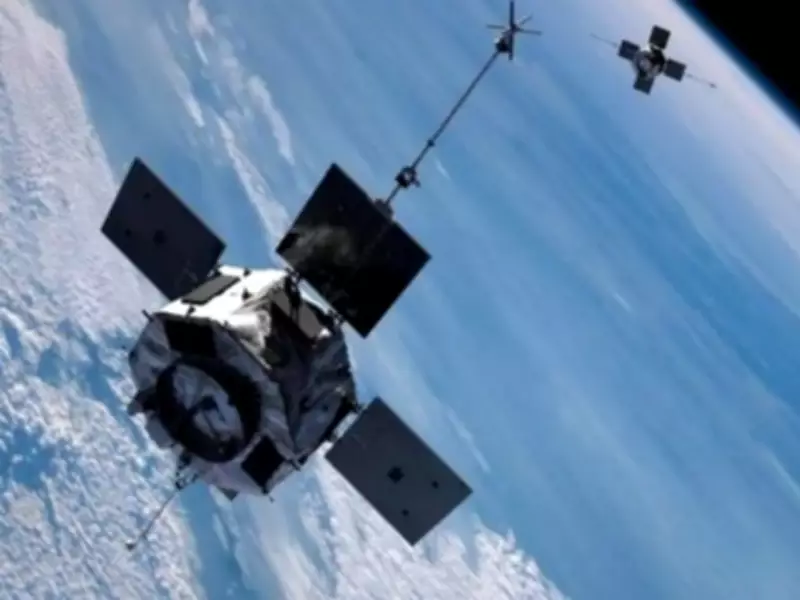
A groundbreaking NASA satellite, the Van Allen Probe A, is scheduled to return to Earth after spending nearly fourteen years in orbit, according to reports from People.com. The 1,323-pound spacecraft is expected to burn up upon re-entering the Earth's atmosphere on Tuesday night, with NASA officials providing a 24-hour window for the event due to uncertainties in the exact timing.
Minimal Risk from Falling Debris, Says Expert
NASA has stated that there is only a remote 1-in-4,200 chance of any debris from the satellite causing harm to individuals on the ground. Retired astrophysicist Jonathan McDowell emphasized that the public should not be concerned about a close encounter with space debris from this re-entry. "For the average person, it will be a nice light in the sky if you get lucky and, otherwise, don't worry about it," McDowell told The New York Times. He further noted that other re-entries, such as those involving 20-ton Chinese rocket stages, pose significantly greater risks. "We have much more scary re-entries that happen. Occasionally, there is a 20-ton Chinese rocket stage that comes down. Those are much scarier for me," he added.
Unprecedented Data Collection on Earth's Radiation Belts
The Van Allen Probe A, along with its counterpart Van Allen Probe B, was launched in August 2012 with the primary mission of studying Earth's two radiation belts. These belts, named after scientist James Van Allen, are crucial for understanding how solar activity impacts various systems, including:

- Satellites and astronaut missions
- Communications and navigation networks
- Power grids on Earth
NASA designed the probes to operate within these harsh radiation environments, gathering scientific data over many years—a feat previously unattained by other spacecraft. The mission officially concluded in 2019 after the satellites depleted their fuel and could no longer maintain proper orientation toward the sun.
Significant Scientific Contributions and Discoveries
Originally planned for a two-year duration, the Van Allen probes far exceeded expectations, providing invaluable insights into space weather—the conditions in near-Earth space driven by solar activity. The mission's findings have been cited in over 600 publications and 55 Ph.D. theses, underscoring its impact on scientific research. Key discoveries include:
- Architecture of the Radiation Belts: The probes revealed detailed structures and dynamics within the belts, enhancing predictions of space weather events.
- Plasma Waves: Similar to ocean storms creating giant waves, space weather generates plasma waves where particles are influenced by electromagnetic fields. The Van Allen Probes pioneered studies into these phenomena.
- Instrumentation Advances: Equipped with tools to measure electromagnetic fields and charged particles, the spacecraft explored invisible forces shaping particle movements around Earth.
NASA highlighted that the Van Allen Probes were the first to operate extensively within the radiation belts, providing critical data that helps protect technology and human missions in space. As this historic satellite concludes its journey, its legacy continues to inform future explorations and safety measures in our increasingly space-dependent world.