In an unprecedented move for the United States space program, NASA executed its first medical evacuation from the International Space Station, bringing an ailing astronaut and three crewmates back to Earth more than a month ahead of schedule.
Emergency Splashdown in the Pacific
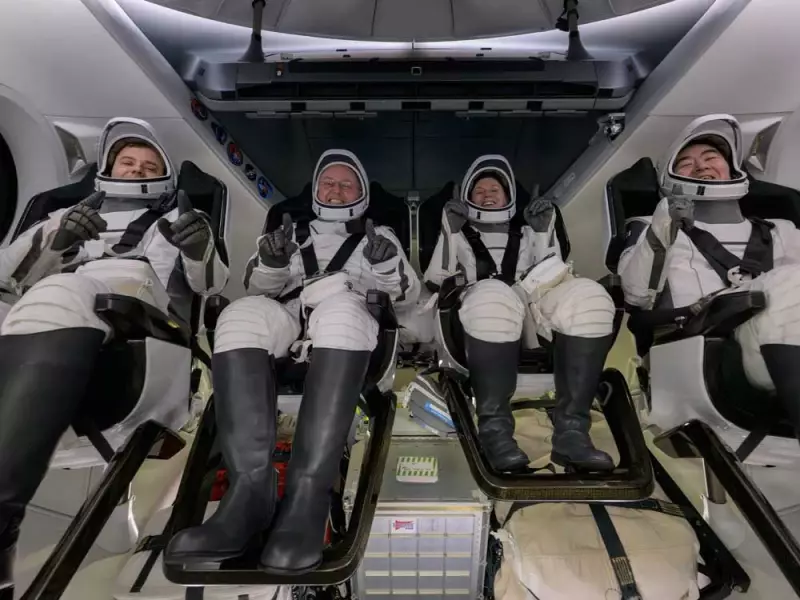
The SpaceX Dragon Endeavour spacecraft, carrying its four-person crew, made a middle-of-the-night splashdown in the Pacific Ocean off the coast of San Diego, California, on Thursday, January 15, 2026. The return journey took less than 11 hours after undocking from the orbiting laboratory.
The entire crew—NASA astronauts Zena Cardman and Mike Fincke, Japan Aerospace Exploration Agency (JAXA) astronaut Kimiya Yui, and Roscosmos cosmonaut Oleg Platonov—was taken directly to a San Diego-area hospital for evaluation and an overnight stay. Officials have not identified which astronaut required the evacuation or disclosed the nature of the medical issue, citing patient privacy.

A Mission Cut Short
The health problem emerged on January 7, 2026, leading NASA to cancel a planned spacewalk by Cardman and Fincke the following day. After assessment, the decision was made to end the Crew-11 mission, which began in August 2025, significantly early.
NASA's new administrator, Jared Isaacman, emphasized the seriousness of the situation while reporting the astronaut was stable. "Obviously, we took this action because it was a serious medical condition," Isaacman stated following the successful recovery. "The astronaut in question is fine right now, in good spirits and going through the proper medical checks."
He clarified that while the situation required a swift return, it was not classified as an in-flight emergency. The capsule's entry and splashdown required no special modifications.
Impacts and Next Steps for the ISS
The early departure leaves the International Space Station with a reduced crew of just three: one American and two Russian astronauts. This marks the first time NASA has cut short a spaceflight for medical reasons, though the Russian space program conducted a similar evacuation decades ago.
NASA and SpaceX are now working to move up the launch of the next crew, originally targeted for mid-February. Until that crew—comprising two Americans, one French, and one Russian astronaut—arrives, the station will be unable to conduct spacewalks, even for emergency repairs.
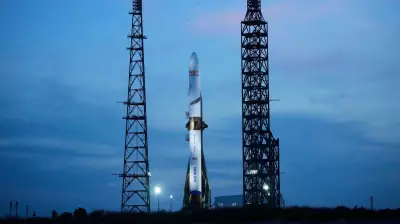
The incident occurs as NASA prepares for its first crewed moon mission in over 50 years. Isaacman noted the agency is managing both priorities but acknowledged that if conflicts arise, "that is a very good problem to have at NASA." The moon rocket is scheduled for a fueling test in early February, with a potential launch as soon as February 6.
The astronaut at the center of the evacuation is expected to undergo in-depth medical checks before potentially flying back to Houston with the crew on Friday, assuming all are cleared for travel. Plans for Platonov's return to Moscow remain unclear.