Total Lunar Eclipse 2026: Your Complete Guide to the 'Blood Moon' Phenomenon
Skywatchers and astronomy enthusiasts are eagerly anticipating a spectacular celestial event: a total lunar eclipse, often referred to as a 'Blood Moon,' scheduled for 2026. This astronomical occurrence offers a breathtaking visual display as the Moon passes through Earth's shadow, transforming its appearance into a striking reddish hue.
The Science Behind the Blood Moon
During a total lunar eclipse, the Earth positions itself directly between the Sun and the Moon, casting its shadow upon the lunar surface. Unlike a solar eclipse, which requires special eye protection to view safely, lunar eclipses are completely safe to observe with the naked eye. The characteristic red color, which gives rise to the 'Blood Moon' nickname, results from a fascinating atmospheric phenomenon.
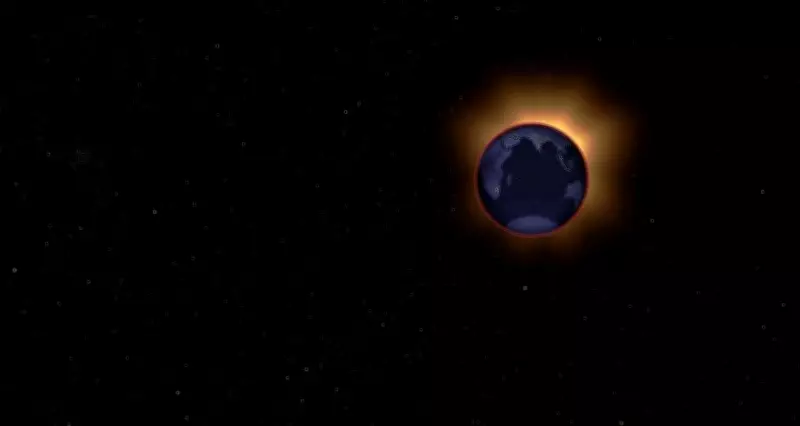
Sunlight filtering through Earth's atmosphere undergoes a process called Rayleigh scattering, where shorter blue wavelengths are scattered away, while longer red wavelengths are bent or refracted around our planet. This filtered red light then illuminates the Moon, creating the dramatic crimson glow. NASA's Scientific Visualization Studio has provided detailed visualizations showing the Moon's landscape reddened by this atmospheric filtering, with the Sun obscured by Earth while the solar corona remains faintly visible.

Visibility and Viewing Opportunities
The 2026 total lunar eclipse will be visible across multiple regions, offering prime viewing opportunities for observers in North America, parts of South America, Asia, and Australia. The exact timing and duration will vary by location, with totality—the period when the Moon is completely within Earth's umbral shadow—lasting approximately 1 hour and 25 minutes.
For optimal viewing, astronomers recommend finding a location with minimal light pollution and an unobstructed view of the eastern horizon. Unlike many astronomical events that require telescopes or binoculars, this lunar eclipse will be readily visible without any special equipment, though optical aids can enhance the viewing experience by revealing more surface detail during the reddish phase.
Historical and Cultural Significance
Lunar eclipses have captivated human imagination for millennia, featuring prominently in various cultural traditions and historical records. Many ancient civilizations interpreted these events as omens or messages from deities, while modern science has demystified the phenomenon without diminishing its awe-inspiring nature.
The upcoming eclipse holds particular significance for the scientific community as well. Researchers continue to study lunar eclipses to gather data about Earth's atmosphere and its interaction with solar radiation. These events provide valuable opportunities to observe how different atmospheric conditions affect the precise color and brightness of the eclipsed Moon.
Preparing for the Celestial Spectacle
As the 2026 eclipse approaches, astronomy organizations and planetariums worldwide are planning public viewing events and educational programs. Enthusiasts should mark their calendars and monitor local astronomy club announcements for organized gatherings. While weather conditions always pose a potential challenge for eclipse viewing, even partially cloudy skies can still offer glimpses of this remarkable event.
This total lunar eclipse represents one of the most accessible and visually stunning astronomical phenomena, bridging scientific understanding with natural wonder. Whether you're an experienced astronomer or simply curious about the night sky, the 2026 Blood Moon promises to deliver a memorable celestial display that highlights the dynamic relationships within our solar system.