

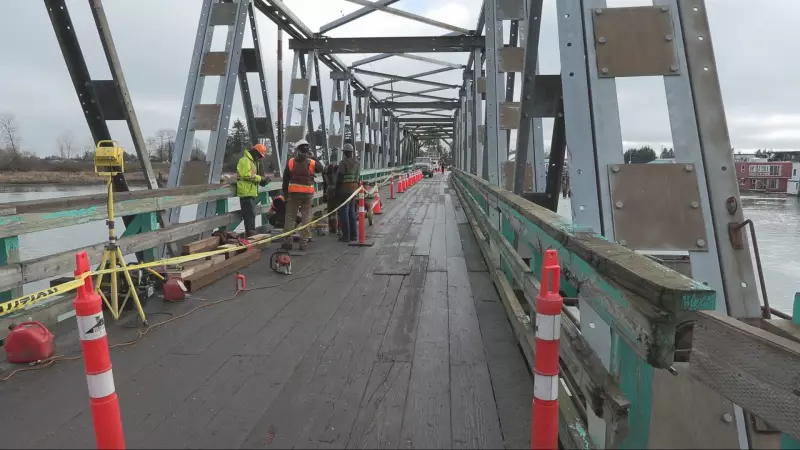
Agricultural Sector in British Columbia Confronts Supply Chain Uncertainty
Farmers across British Columbia are expressing mounting anxiety as provincial transportation authorities have failed to provide any definitive timeline for reopening a crucial bridge that sustained significant damage from a barge collision. The incident has created substantial disruptions to agricultural supply chains, with producers warning of potentially severe consequences if repairs are delayed further.
Critical Infrastructure Compromised
The bridge, which serves as a vital transportation link for agricultural goods moving between farming regions and distribution centers, was damaged when a commercial barge collided with its support structure. Transportation officials have confirmed the bridge remains closed to all traffic while structural assessments continue, but have declined to estimate when repairs might be completed or when the crossing might reopen.
"We're facing a perfect storm of logistical challenges," explained one Fraser Valley farmer who requested anonymity. "This bridge is essential for getting our products to market efficiently. Every day it remains closed increases our costs and threatens our ability to fulfill contracts."

Economic Implications for Agricultural Producers
The agricultural community has highlighted several immediate concerns resulting from the bridge closure:
- Increased transportation costs as producers must reroute shipments through alternative, often longer, routes
- Potential spoilage of perishable goods due to extended transit times
- Disruption to just-in-time delivery systems that many modern farms rely upon
- Uncertainty regarding fulfillment of export commitments to international markets
Industry representatives have called for greater transparency from provincial authorities regarding the repair timeline and interim measures to support affected agricultural businesses. "We understand that safety assessments take time, but we need some clarity about what to expect in the coming weeks and months," stated the executive director of a British Columbia agricultural association.
Broader Infrastructure Concerns
This incident has reignited discussions about the vulnerability of British Columbia's transportation infrastructure, particularly as climate change increases the frequency of extreme weather events that can damage critical links. Agricultural leaders note that many rural bridges and roads were constructed decades ago and may not withstand modern shipping traffic or environmental stresses.
The provincial government has acknowledged the bridge's importance to the agricultural sector but maintains that comprehensive safety evaluations must precede any repair schedule announcements. Transportation engineers continue to assess the full extent of the damage and develop appropriate remediation strategies.
As farmers await further information, many are implementing contingency plans that include:
- Exploring alternative transportation routes, despite their added costs
- Adjusting harvest and shipping schedules to accommodate extended transit times
- Communicating proactively with customers about potential delays
- Advocating for temporary measures to support affected agricultural businesses
The situation underscores the interconnected nature of transportation infrastructure and agricultural viability in British Columbia, with producers hoping for resolution before planting season intensifies logistical demands on the province's transportation network.






