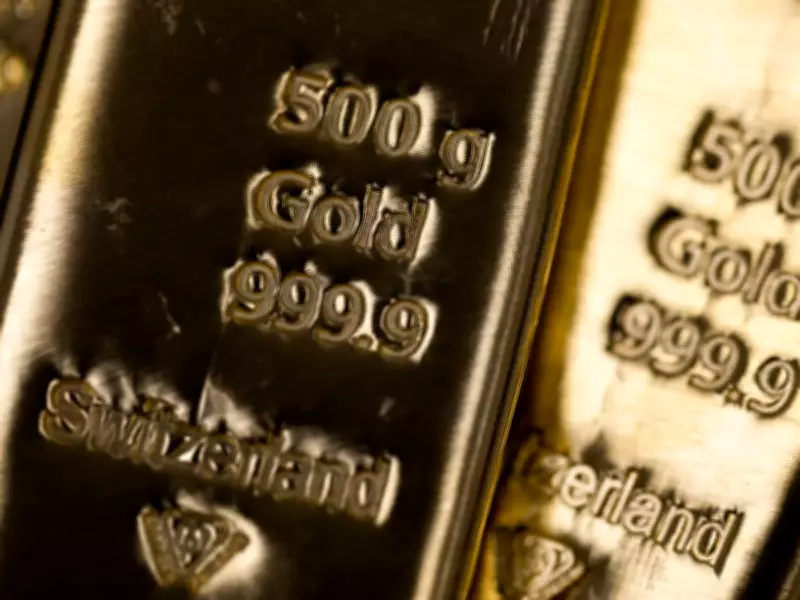
Gold prices experienced a notable decline on Friday, pressured by a strengthening United States dollar and growing concerns about the potential for higher interest rates. The ongoing conflict in the Middle East, now in its second week, has contributed to a significant rally in oil prices, creating inflationary pressures that could influence Federal Reserve policy.
Market Movements and Geopolitical Context
Bullion slumped as much as three percent to approximately US$5,015 per ounce before paring some losses. Meanwhile, Brent crude oil futures briefly approached US$120 per barrel as producers in the Persian Gulf region curtailed output. The conflict between the United States, Israel, and Iran shows no immediate signs of resolution, with attacks on energy infrastructure and disruptions to shipping through the Strait of Hormuz driving up energy prices.
A gauge of the dollar climbed as much as 0.7 percent during trading before stabilizing. The combination of a stronger dollar and rising oil prices has created a challenging environment for gold, which typically doesn't perform well when borrowing costs increase or the U.S. currency strengthens.

Interest Rate Implications and Market Dynamics
The surge in crude oil prices has reignited inflation concerns in the United States, raising the likelihood that the Federal Reserve will maintain current interest rates for an extended period or potentially implement further increases. Higher borrowing costs generally diminish the appeal of non-yielding assets like gold, while a robust dollar makes the precious metal more expensive for holders of other currencies.
Christopher Wong, a strategist at Oversea-Chinese Banking Corp., noted that "in periods of geopolitically driven market stress, investors sometimes sell assets such as gold to raise cash. Once that phase passes, geopolitical uncertainty typically continues to underpin demand for safe havens on dips."
Gold has also served as a source of liquidity during recent volatility in global equity markets, with some investors liquidating their positions to cover losses elsewhere.
Analyst Perspectives and Future Scenarios
Ed Meir, an analyst at Marex, suggested in a recent note that the trajectory of gold prices will largely depend on the duration of the Middle East conflict. "A relatively swift end to the conflict would likely see the dollar weaken and gold rally, while a prolonged war would see the U.S. currency and Treasury yields rise in anticipation of higher inflation and interest rates," Meir explained.
He added a note of caution for investors: "There is a time to buy, a time to sell and a time to simply wait. The latter is the preferred course of action for the moment."
Year-to-Date Performance and Supporting Factors
Despite the recent pullback and choppy trading conditions that have stalled upward momentum, gold has still gained approximately 18 percent so far this year. Several factors have supported this overall growth, including geopolitical uncertainty stemming from U.S. President Donald Trump's policies, threats to Federal Reserve independence, and sustained central bank purchases.
The People's Bank of China continued its gold-buying streak in February, extending its purchasing pattern to 16 consecutive months. This consistent demand from central banks has provided underlying support for gold prices even during periods of market volatility.
Closing Market Data
As of 3:32 p.m. in New York, spot gold fell 0.8 percent to US$5,132.71 per ounce. In contrast, silver gained two percent to $86.57, while both platinum and palladium advanced. The Bloomberg Dollar Spot Index declined 0.2 percent after adding 1.3 percent during the previous week.
The interconnected dynamics of energy markets, currency fluctuations, and monetary policy expectations continue to shape the precious metals landscape, with investors closely monitoring developments in the Middle East for clues about future market direction.