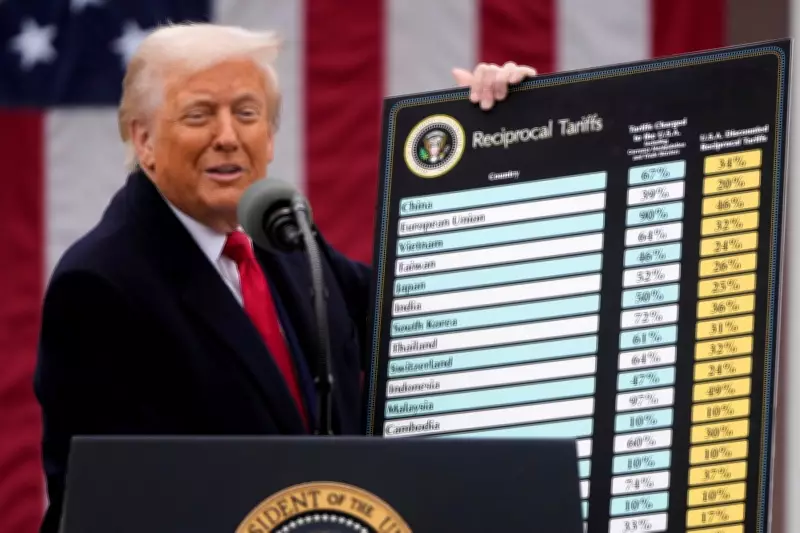
Trump's Tariff Miracle Claim Faces Scrutiny Amid Economic Data
Former President Donald Trump has repeatedly championed tariffs as a catalyst for what he describes as an economic miracle, asserting that these trade policies revitalized American industry and boosted national prosperity. In recent statements, Trump has pointed to his administration's aggressive tariff strategies, including those on steel, aluminum, and Chinese goods, as pivotal in reshaping the U.S. economy. However, a closer examination of the factual record reveals a more nuanced and often contradictory picture, with economic indicators suggesting that the outcomes may not align with Trump's optimistic portrayal.
Economic Reality Versus Rhetorical Claims
While Trump touts tariffs as a success story, data from the U.S. Bureau of Economic Analysis and other sources indicate that the trade deficit actually widened during his tenure, particularly with China. In 2019, the U.S. trade deficit in goods and services reached approximately $616.8 billion, up from $481.0 billion in 2016, the year before Trump took office. This expansion challenges the notion that tariffs effectively reduced imbalances, as imports continued to outpace exports in many sectors. Moreover, studies from institutions like the Federal Reserve and academic researchers have shown that tariffs often led to higher costs for consumers and businesses, as companies passed on increased expenses for imported materials.
Impact on Industries and Employment
The implementation of tariffs had mixed effects across various industries. For instance, the steel and aluminum tariffs were intended to protect domestic producers, but they also sparked retaliatory measures from trading partners, hurting agricultural exports and manufacturing sectors reliant on imported components. According to a report by the Tax Foundation, tariffs imposed during Trump's presidency resulted in an estimated reduction of over 160,000 jobs and a decrease in long-term economic growth. While some companies benefited from reduced competition, others faced supply chain disruptions and increased operational costs, undermining the broader economic gains Trump claims.

Broader Economic Context and Legacy
Beyond tariffs, Trump's economic policies included tax cuts and deregulation, which contributed to pre-pandemic growth but also exacerbated income inequality and federal deficits. The COVID-19 pandemic further complicates the assessment, as it triggered unprecedented economic upheaval that overshadowed tariff impacts. Economists argue that attributing economic performance solely to tariffs overlooks these multifaceted factors. As debates over trade policy continue, Trump's assertions serve as a reminder of the divergence between political rhetoric and empirical evidence, highlighting the importance of data-driven analysis in evaluating economic strategies.
In summary, while Trump frames tariffs as a miraculous economic tool, the evidence suggests a more complex reality marked by trade deficits, consumer price increases, and sectoral challenges. This discrepancy underscores the need for a balanced perspective when assessing the true effects of trade policies on the economy.