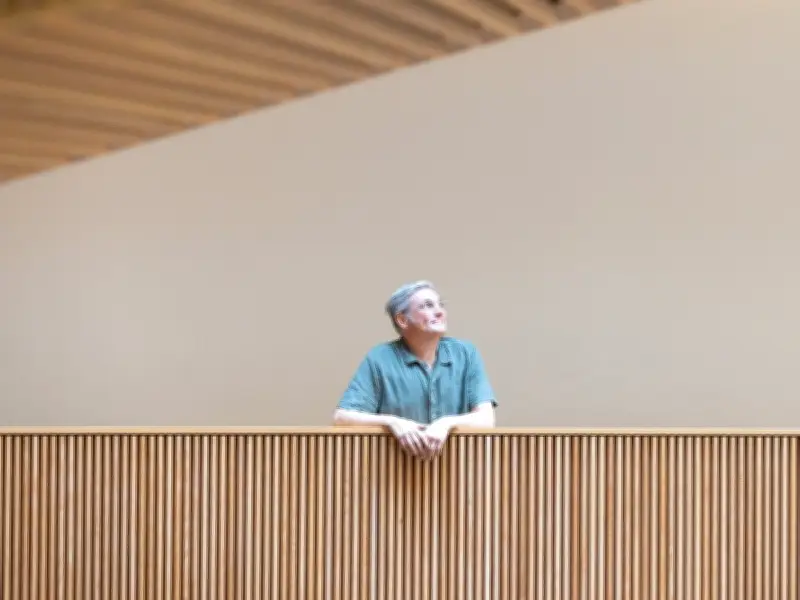
Paul Freeman, the Calgary Public Library's first Artificial Intelligence Collaborative Artist in Residence, began his tenure on Tuesday, June 30, 2026. His office at the Central Library is open to the public every Tuesday and Wednesday until Labour Day, offering a space for dialogue about AI art.
AI as a Collaborative Tool, Not a Shortcut
Freeman, a Calgary-born artist and Alberta University of the Arts (AUArts) graduate, first engaged with stable diffusion and AI-generated images in 2002. He has long sought creative uses for the technology while acknowledging the controversy surrounding AI art. His primary challenge was designing a public workshop that “didn’t just suck.”
“If we want to use AI as a shortcut, as an easy way out, as a way of avoiding doing things ourselves, it invariably turns around and bites us pretty hard,” Freeman said. He stresses that human intention is critical: without critical thought, desire, and intention, AI can produce large amounts of low-quality content.

Distinguishing AI Art from ‘Slop’
Freeman distinguishes his work from typical AI-generated images by emphasizing the labor involved. He uses prompts to generate multiple images, layers them, combines them, and then sends them through AI again to morph into something new. His creations can exceed 5 billion pixels, aiming for wall-sized detail.
“I feel like what distinguishes what I’m doing from other stuff that might be out there is there is a ton of work involved,” Freeman said. “There are thousands and thousands of decisions that have been made by the time this thing has grown to a billion pixels, and that’s the same as what a painter is doing, pushing mud around on a canvas. They’re making choices, they’re making decisions, and that’s what we respond to when we see good art.”
Addressing Controversy and Policy Needs
Freeman acknowledges the controversy surrounding the residency but positions himself as a resource for public debate. “I’m here not as an AI defender, not as an AI advocate, but more as somebody who’s interested in asking these questions and open to other ideas about AI, art and what it could be,” he said.
A fundamental concern for artists is preventing their work from being stolen by AI. Freeman believes this must be addressed at a policy level. His residency aims to foster conversations about AI art and its implications for creativity and ownership.