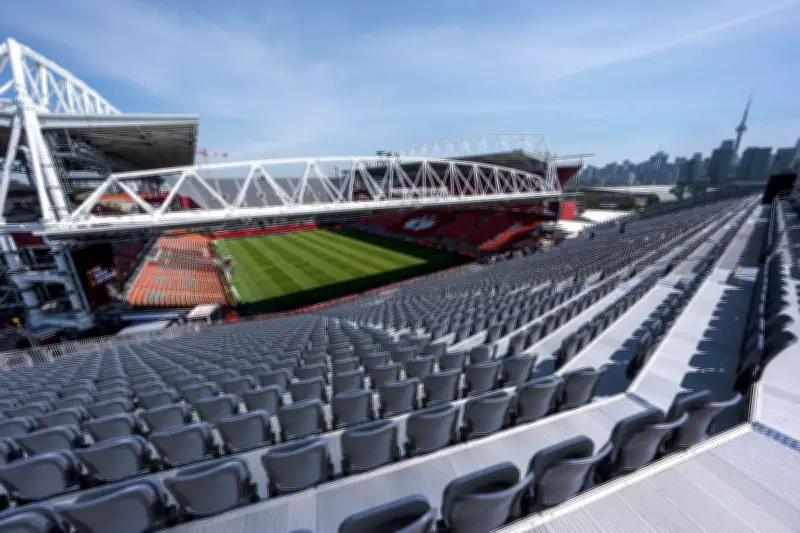
As the FIFA World Cup 2026 kicks off in Toronto, telecom companies are pulling out all the stops to ensure robust cellular networks for the influx of fans, media, and staff. The Canadian Press reports that carriers are deploying Cell on Wheels (COWs), antennas, and fiber-optic cables to handle the massive data demand.
Massive Network Upgrades
Toronto Stadium, the venue for the opening match, has seen significant infrastructure upgrades. Telecom providers have installed temporary cell towers, known as COWs, to boost capacity. These mobile units are strategically placed around the stadium and fan zones to prevent network congestion.
Small cell technology is also being deployed to enhance coverage indoors and in crowded areas. These low-power nodes work alongside traditional macro towers to deliver faster speeds and lower latency. Fiber-optic connections have been laid to support backhaul for the increased data traffic.

FIFA Collaboration
FIFA has worked closely with Canadian telecoms to ensure seamless connectivity for broadcasting and fan experiences. The governing body requires robust networks for live streaming, social media, and official apps. Carriers have also upgraded Wi-Fi networks within the stadium to offload cellular traffic.
Rogers Communications, Bell Canada, and Telus have all invested heavily in the upgrades. Rogers, the official telecom partner for the event, has installed additional antennas and deployed portable base stations. Bell has focused on expanding its LTE and 5G coverage in the downtown core. Telus has enhanced its network with new spectrum and small cells.
Fan Experience
For fans, the improved connectivity means faster uploads, smoother video calls, and reliable access to match updates. Social media platforms are expected to see a surge in activity, with fans sharing photos and videos from the stadium. The networks are designed to handle peak usage during halftime and after goals.
Telecoms have also set up dedicated support teams to monitor network performance in real time. Engineers are on standby to address any issues that may arise during matches. The goal is to provide a seamless experience for the estimated 50,000 fans attending each game at Toronto Stadium.
Economic Impact
The World Cup is a major economic driver for Toronto, with millions of visitors expected. The telecom upgrades are a critical part of the city's preparations. Beyond the tournament, these improvements will benefit residents and businesses long after the final whistle. The enhanced infrastructure supports the growing demand for mobile data in the region.
As Canada hosts its first World Cup matches, the telecom industry is playing a vital role in making the event a success. From COWs to fiber, these technologies are ensuring that everyone stays connected during the world's biggest sporting event.