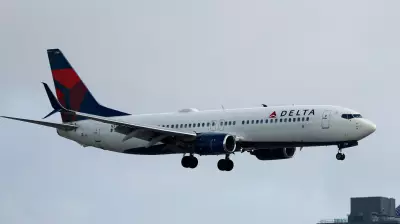
WestJet Airlines Ltd. is gradually raising fares to offset soaring jet fuel costs, which have doubled this year, and warns that further increases are on the horizon. The Calgary-based carrier is implementing fare hikes, fees, and surcharges over time to avoid shocking customers and reducing demand.
Fuel Costs Spike Amid Global Energy Crisis
Alexis von Hoensbroech, WestJet's chief executive, explained that jet fuel prices "spiked in a heartbeat" after the United States and Israel went to war with Iran, triggering a global energy crisis. The rapid rise made it impossible for the airline to recover losses immediately.
"We are pretty successful in passing on an increasing share of the costs," von Hoensbroech said. "I'm pretty confident that in the course of this year, at some point in time, we will be passing on the entire incremental cost. Just logically, there's no other way, because you're either passing your costs on, or you're out of business."

Industry-Wide Impact
Other Canadian airlines are following similar strategies, imposing surcharges and raising fares as they navigate a second dramatic spike in jet fuel in four years. Spot prices for American jet fuel have reached highs seen only twice before in records dating back to 1990: during the 2008 global financial crisis and after Russia invaded Ukraine in 2022.
The latest energy crisis began when Iran effectively closed the Strait of Hormuz, a critical oil corridor, leading to surging commodity prices. Gasoline costs and airline tickets have moved in lockstep, with average domestic airfares in Canada rising by nearly 20%, according to travel search engine KAYAK.
Demand Concerns
"If fares go up significantly, then these higher costs will eventually come with some destruction of demand," von Hoensbroech noted. "There will be people who will fly less and people who cannot afford a plane ticket anymore."
To manage potential demand drops, WestJet is adjusting flight schedules by reducing frequencies rather than canceling routes entirely. Other global carriers have made more drastic cuts, with aviation data firm Cirium reporting a 3.6% reduction in summer service, eliminating over nine million seats.
WestJet's approach reflects a careful balancing act between recovering costs and maintaining customer demand in a volatile fuel market.