Canadian Coca-Cola enthusiasts hoping for a sweeter, more nostalgic version of their favourite drink are facing disappointment. Despite a very public push from former U.S. President Donald Trump, the Coca-Cola Company has confirmed it has no plans to bring its newly released cane-sugar sweetened cola north of the border.
The Presidential Push for Real Sugar
This summer, the conversation around Coca-Cola's formula was unexpectedly reignited from the highest office. Former President Donald Trump took to social media to announce he had been in talks with the beverage giant. "I have been speaking to @CocaCola about using REAL Cane Sugar in Coke in the United States, and they have agreed to do so," he posted, later adding, "This will be a very good move by them — You’ll see. It’s just better!"
This direct intervention has led to the current rollout of a cane-sugar version of Coca-Cola in the United States. However, this development serves as what some are calling another snub to the Canadian market, which will continue to be served the high-fructose corn syrup (HFCS) formula.

A Tale of Two Sweeteners and a 43-Year History
The root of this sugar divide dates back to the early 1980s. Around 1982, the same era famous for the "Coke is it!" television campaign, The Coca-Cola Company began replacing the original cane sugar in its primary recipe with high-fructose corn syrup. This shift was a cost-saving measure that became the industry standard in North America, with one notable exception: Mexico.
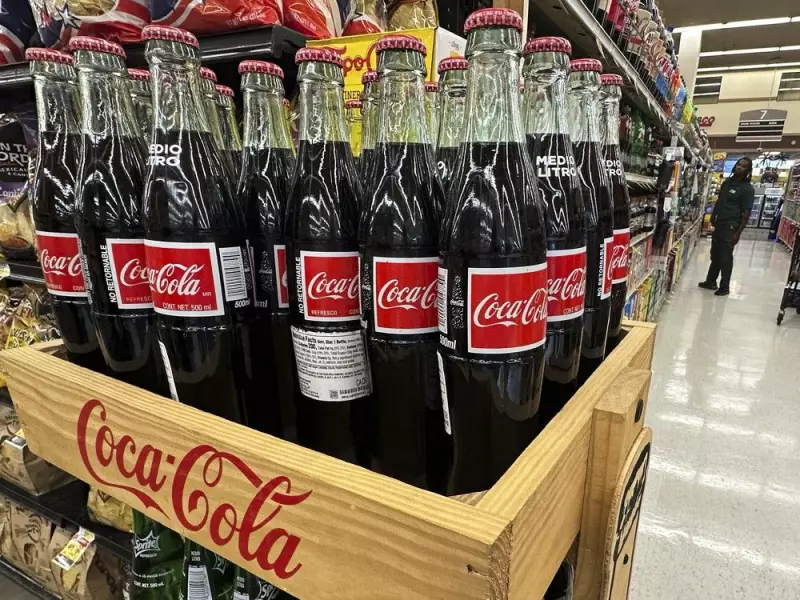
For decades, Mexican Coca-Cola, bottled with cane sugar, has been an imported delicacy for connoisseurs in both the U.S. and Canada, often found in specialty stores and sold at a premium price. The distinction in sweeteners has created a persistent, albeit niche, demand for the original taste.
Compounding the issue for Canadian consumers are the country's labelling laws. In the U.S., bottles containing HFCS are clearly labelled as such. In Canada, however, regulations allow HFCS to be listed as "glucose-fructose" under the broader umbrella of "sugar," which can misleadingly imply the product contains real cane or beet sugar.
Nostalgia and Health: The Marketing Power of 'Real Sugar'
According to branding and industry experts, Coca-Cola's decision to reintroduce a sugar-sweetened option in the U.S. is a calculated move driven by powerful consumer trends. Eran Mizrahi, CEO of global food and beverage sourcing firm Source86, identifies two major drivers behind the strategy: nostalgia and health.
"People are looking more and more for products that feel authentic and simple, and in my opinion, classic soft drinks like this one satisfy exactly that," Mizrahi explained.
Baruch Labunski, founder of brand reputation firm Rank Secure, agrees, noting the move connects "real sugar to memories of simpler products." He suggests this emotional connection is particularly effective with millennials and Gen Z, who often seek what they perceive as a 'cleaner' version of classic products.
However, Labunski offers a word of caution, describing this as a "perception of purity." He believes Coca-Cola is more focused on meeting emotional needs than fundamentally reformulating its products for health. "[It] is demonstrating that, in today’s market, the label is as important as the product," he added.
Coca-Cola is not alone in this retro-sweetener trend. Competitor Pepsi has also launched a cane sugar version of its cola, signalling a broader industry shift towards capitalizing on consumer desire for more natural ingredients, even if the health differences between the sweeteners are minimal.
For now, Canadians are left with a familiar, HFCS-sweetened taste and the lingering question of when, or if, the version sweetened with "real cane sugar" will ever make its way across the border.