Airline Stocks Experience Sharp Decline Amid Escalating Middle East Tensions
Airline stocks have taken a significant hit as passengers rush to evacuate the Middle East region following a surge in geopolitical tensions. The conflict involving the United States, Israel, and Iran has led to widespread flight cancellations, creating chaos at major airports and prompting a sell-off in aviation-related equities.
Travel Chaos at Beirut International Airport
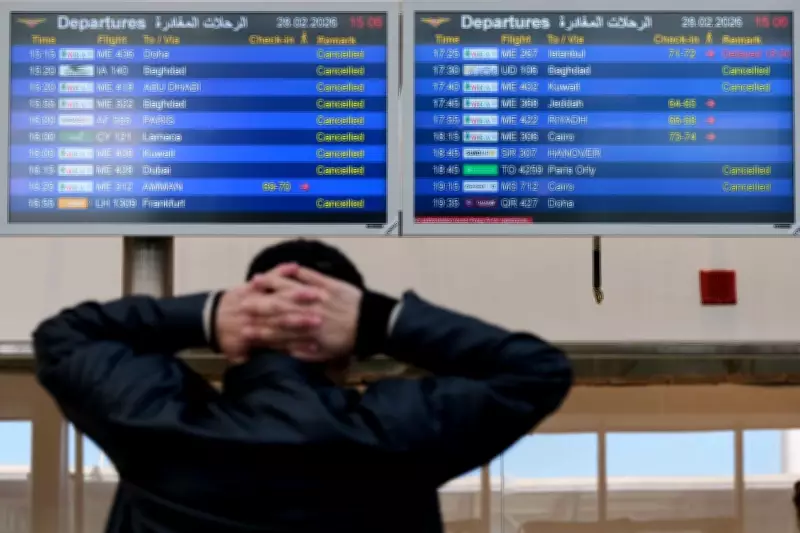
At Beirut Rafik Hariri International Airport in Lebanon, travelers were seen anxiously checking departure boards on Saturday, February 28, 2026, as numerous airlines canceled flights due to the escalating conflict. The airport, typically a bustling hub for regional travel, became a scene of frustration and uncertainty as passengers scrambled to find alternative routes out of the region.
The visual documentation from the airport captured the palpable tension among travelers, many of whom expressed concerns about their safety and the rapidly changing travel landscape. Airlines across multiple carriers made the difficult decision to suspend operations, prioritizing passenger safety over commercial considerations.

Financial Markets React to Travel Disruptions
The aviation sector has experienced substantial financial pressure as investors respond to the operational challenges facing airlines with significant Middle East exposure. Stock prices for major carriers have declined noticeably, reflecting concerns about:
- Immediate revenue losses from canceled flights and disrupted schedules
- Increased operational costs associated with rerouting aircraft and accommodating stranded passengers
- Long-term implications for travel demand in the region
- Potential insurance premium increases for flights operating in conflict zones
Market analysts note that the timing of these disruptions comes during what is typically a busy travel period, amplifying the financial impact on airline balance sheets. The uncertainty surrounding the duration and escalation potential of the conflict has created additional volatility in aviation stocks.
Broader Implications for Global Travel
The situation in the Middle East has created ripple effects throughout the global travel industry. Beyond immediate flight cancellations, several concerning trends have emerged:
- Regional connectivity has been severely compromised, with many routes through Middle Eastern hubs becoming unavailable or unreliable
- Travel insurance providers have begun adjusting policies and premiums for destinations throughout the region
- Corporate travel departments are reevaluating business travel to affected areas
- Tour operators have suspended packages and excursions to multiple Middle Eastern destinations
The aviation industry, still recovering from previous global disruptions, now faces another significant challenge that threatens to undermine recent progress toward operational stability and financial recovery.
Passenger Experiences and Safety Concerns
Travelers caught in the disruption have reported varying experiences, from last-minute flight cancellations with minimal notice to extended airport stays while seeking alternative arrangements. Many have expressed appreciation for airline safety precautions while simultaneously voicing frustration about the logistical challenges of sudden travel plan changes.
Safety remains the paramount concern for both airlines and regulatory bodies, with aviation authorities closely monitoring airspace safety and issuing updated guidance for flights operating near conflict zones. The situation serves as a stark reminder of how quickly geopolitical events can transform the travel landscape and impact both individual journeys and broader industry dynamics.