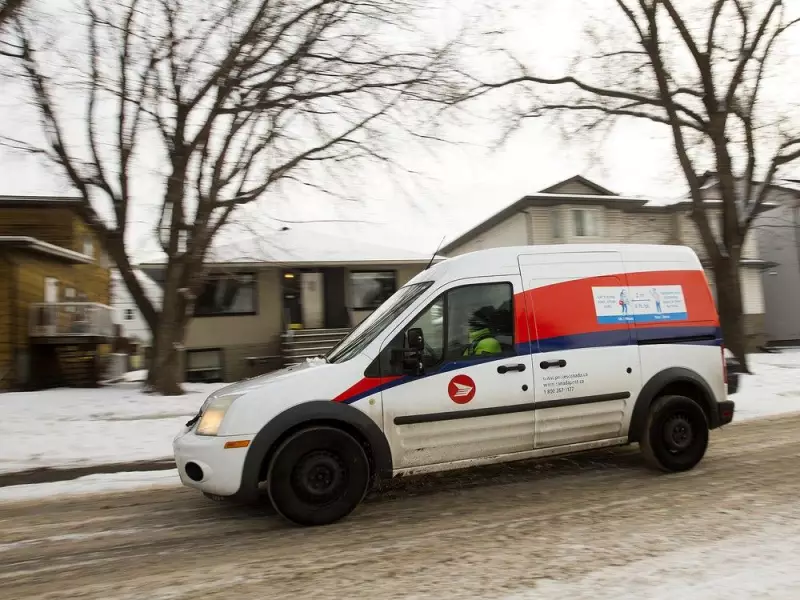
In a historic move marking the end of a 400-year tradition, Denmark has announced it will eliminate traditional postal mail delivery (PMD) in 2026. This radical shift to a fully digital communication system has ignited a conversation in Canada about the future of its own postal service, as physical mail volumes continue a steep, decades-long decline.
The Danish Precedent and a Shrinking Canadian Inbox
The decision by Denmark, a nation of 6 million people, follows a staggering 90 per cent drop in postal mail volume since the year 2000. While Canada's situation is different in scale, the trend is unmistakably similar. For comparison, the United States Postal Service saw delivery volumes fall by 50 per cent between 2006 and 2024.
In a letter to the editor, Edmonton resident Randall J.R. Krausher points to his own experience as a microcosm of the national issue. "My letterbox receives one relevant piece of mail only once or twice a week," he writes. The rest, he notes, is dominated by unaddressed advertising flyers and credit card offers—material he says he would not miss if home mail delivery ended.

Facing Reality and Protecting Workers
Krausher acknowledges the human impact of such a transition, recognizing that Canada Post's 55,000 letter carriers would not want to lose their jobs. His central argument, however, is that the federal government must begin planning for an inevitable decline.
"What our government needs to do, whenever it has the courage to do so, is to put in place a program to find alternate occupations (with any necessary retraining) to replace PMD jobs that are no longer required," he states. The call is not for immediate cancellation but for a proactive, managed transition that supports workers into new roles in a changing economy.
A Parallel Crisis in Healthcare
The same edition of letters featured a starkly related issue from another Edmonton writer, highlighting systemic pressures on public services. Rick Lauber responded to news of a man who died after an eight-hour wait in an Edmonton emergency room.
Lauber shared a personal pre-COVID experience where he spent two days on a hallway gurney being treated for pancreatitis. He stresses the problem is not frontline staff but a severe shortage of hospital care beds, a deficit that will only worsen as the population ages. "How many more patients will die in the hospital waiting room before this problem is corrected?" he asks.
Together, these letters paint a picture of essential services—from mail to healthcare—at a crossroads, requiring difficult but forward-looking policy decisions to meet the realities of the 21st century.