Trump Declares Iran's Supreme Leader Killed in Military Offensive
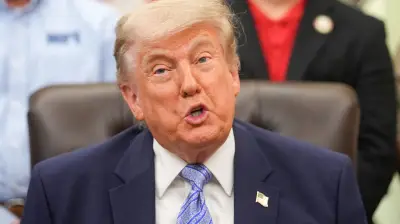
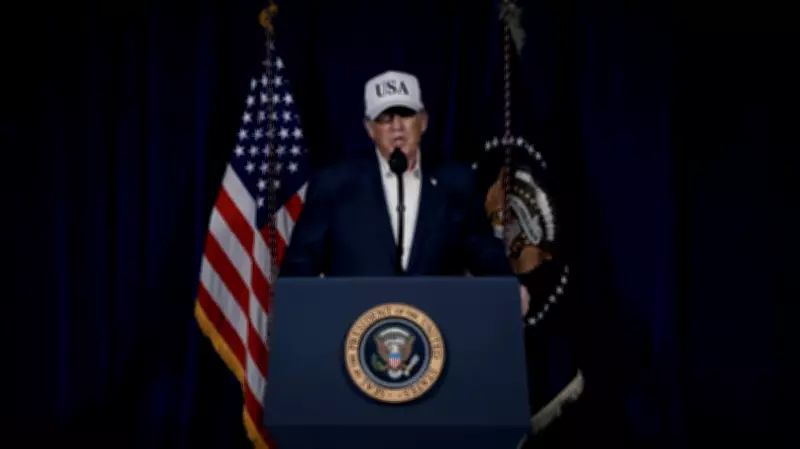
Roughly twelve hours after launching a war on Iran early Saturday morning, President Donald Trump stated that his military campaign had resulted in the death of the country's supreme leader, Ayatollah Ali Khamenei. In a post on Truth Social, Trump asserted, "This is not only Justice for the people of Iran, but for all Great Americans, and those people from many Countries throughout the World, that have been killed or mutilated by Khamenei." However, his attempt to justify the war as a noble endeavor faces significant skepticism on the global stage.
Escalation Fuels Perception of U.S. as Rogue Actor
The administration's latest military escalation is amplifying a dangerous perception worldwide: that the United States is acting as a rogue state. This view portrays the U.S. as fueling instability, operating illogically and illegally, and endangering innocent lives. Mark Kersten, a professor at the University of the Fraser Valley in Canada, highlighted the pattern, noting, "Even before today, the pattern was clear: this is a state that actively disregards international law and its protections for civilians, which makes civilians – makes children, makes pregnant mothers, make people who have nothing to do with geopolitical aims at all – less safe everywhere."
Kersten characterized the new conflict as "unequivocally illegal… a wanton and clear violation" of the United Nations charter. Trump initiated the offensive in partnership with Israel without seeking broader international support or legal justification through the UN Security Council, unlike former President George W. Bush's approach before the Iraq invasion. The assassination of Khamenei, a sitting head of state, further complicates the situation.

Contradictory Claims and Civilian Casualties
An anonymous U.S. official later claimed the action was preemptive against an anticipated Iranian missile attack, but no evidence has been provided, and experts deem such a scenario unlikely. This marks the second time in less than a year that Washington has ostensibly prioritized diplomacy with Tehran before opting for war. The administration has not outlined any plan to prevent a spiral of violence in Iran and across the Middle East.
Tragically, a strike in the U.S.-Israeli operation hit an Iranian primary school, killing over 100 people, mostly schoolgirls. Throughout Saturday, Iranian retaliation targeted neighboring countries aligned with the U.S., injuring individuals and striking civilian sites like airports and hotels.
International Alarm and Historical Parallels
Officials in the region and Europe are alarmed, with U.S. counterparts struggling to reassure them. Jennifer Gavito, a former State Department official, referenced past American interventions, saying, "I look back to Libya and Iraq… I don't know what reassurance could have been given in that moment." She noted public criticism from Oman's foreign minister, who felt betrayed by the U.S. using negotiations as a cover for military action.
Reports indicate U.S. and Israeli officials quietly planned the Iran campaign for months, even as Trump publicly expressed desire for a deal. In the coming days, skepticism is likely to grow as Trump offers conflicting visions for conflict resolution, advocating for civilian uprising while continuing bombing campaigns.
Broader Implications for U.S. Global Standing
The war compounds existing wariness of U.S. conduct, from Trump's recent actions in Venezuela to the Gaza conflict, where American support for Israeli policies has drawn international condemnation. Randa Slim of the Stimson Center observed, "Coming after the Gaza war… we have now another instance confirming again that the U.S. does not work according to international law. The U.S. is increasingly seen as a country that does not play by the book."
Despite this, some U.S. allies dismiss global legitimacy concerns. Sen. Lindsey Graham attacked European countries for suggesting a return to diplomacy, calling it "pathetic." Meanwhile, Iran's retaliatory attacks have drawn criticism for undermining regional rapprochement efforts.

Search for Voices of Reason
As people worldwide fear unpredictable U.S. policy spirals, Kersten emphasized that change must come from within the United States. "If this dangerous path is to stop, it is only going to stop because of the actions of people within the United States," he said, noting that international entities like Canada or the UN are powerless to intervene effectively.