Canada must pursue both infill and outfill housing development strategies to address the nation's housing shortage, according to a new analysis by Murtaza Haider and Stephen Moranis. The authors argue that the debate over which approach is superior is needless, as demographic data shows both are essential to meet diverse household needs.
Infill vs. outfill: a false choice
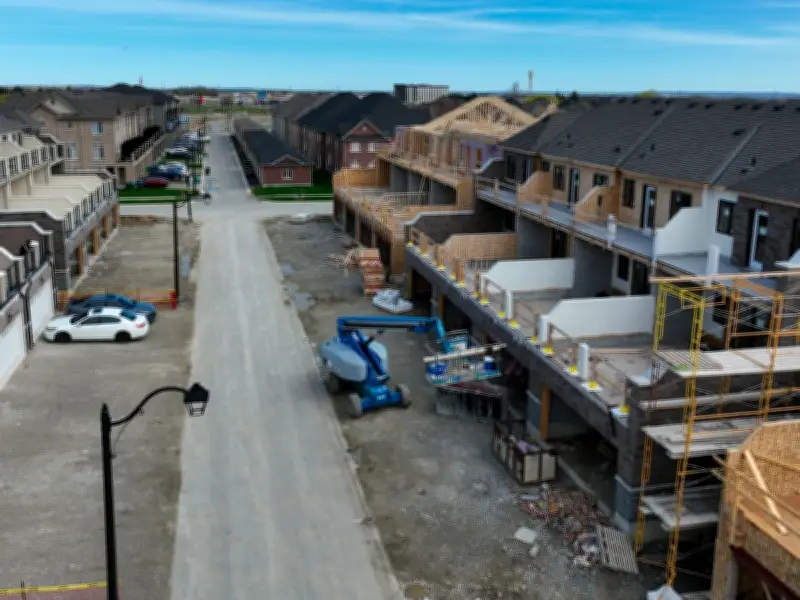
The infill approach, favored by many planners, focuses on increasing housing density in already-developed areas, particularly near transit stations. This strategy aims to create more compact communities and leverage existing infrastructure. Outfill, on the other hand, involves building on cheaper land in suburban or peripheral regions, often accommodating larger families and single-family homes.
Critics of infill often include long-standing residents who oppose multi-unit developments in single-family neighborhoods, citing construction disruption, demographic changes, and strain on traffic and parking. In rare cases, multi-family units become rooming houses, altering neighborhood character.

Transit-oriented development potential
A recent analysis by the Canadian Urban Institute (CUI) found that in cities with rail-based transit, only 6% of total land lies within 800 metres of a transit station, yet 25% of urban residents and 29% of dwellings are in these transit-proximity areas. Furthermore, 47% of the 7.9 million jobs in these cities are located within that radius. The CUI estimates potential to build 4.4 million more dwellings near transit stations, supporting transit-oriented development (ToD).
However, the authors caution that infill alone cannot meet all needs. "A transit-focused infill strategy alone will not eliminate the need to construct millions of new homes for growing families in regions where land remains relatively inexpensive and plentiful," they write.
Demographic diversity requires diverse housing
Haider and Moranis emphasize that Canada's demographic makeup includes a wide range of household types, from singles and couples to families with children. Infill developments near transit tend to attract smaller households, while larger families often seek outfill options with more space and lower costs. "Analysis of Canadian demographics suggests Canada need not choose one development mode over another," they state.
The authors conclude that a one-size-fits-all approach is inappropriate, and both infill and outfill are vital to meet the country's diverse housing needs.