IMF Chief Warns Middle East War Will Test Global Economic Resilience
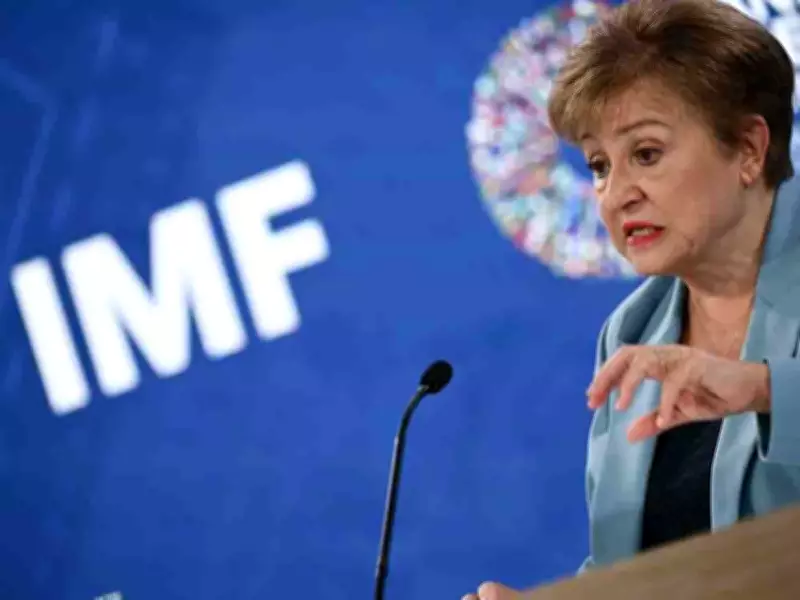
International Monetary Fund Managing Director Kristalina Georgieva has issued a stark warning that the ongoing war in the Middle East represents a significant test for the global economy. Speaking at the Asia in 2050 Conference in Bangkok, Georgieva emphasized that "new shocks in different shapes and sizes" will continue to emerge, creating challenges for policymakers worldwide.
Potential Impacts of Prolonged Conflict
Georgieva underscored the IMF's deep concern about the human suffering resulting from the Middle East crisis while highlighting the economic ramifications. A prolonged conflict could significantly affect multiple economic indicators, including:
- Energy prices through potential disruptions to oil flow
- Market sentiment and investor confidence
- Global economic growth projections
- Inflation rates across multiple economies
"We are in a world of more frequent, more unexpected shocks," Georgieva stated. "Most of the time, we cannot predict what exactly they will be. But all of the time, we can strive to be ready for them."

Current Economic Disruptions and Monitoring
The IMF is closely monitoring how the Middle East conflict is already affecting global markets. Iran's retaliation to United States-Israel strikes has disrupted travel and oil flow through the critical Strait of Hormuz. Bloomberg Economics scenarios indicate that elevated energy prices could spur inflation and damage global growth.
Georgieva noted that these challenges come on top of existing tariff turmoil, which she warned last month could undercut an otherwise "buoyant" U.S. economy. The IMF will incorporate its findings about the conflict's impact in the World Economic Outlook scheduled for publication in April.
Global Growth Projections and Regional Preparedness
As recently as January, the IMF revised its global growth projections slightly higher to 3.3 percent for 2026 and 3.2 percent for 2027. However, these projections now face uncertainty due to geopolitical developments.
The IMF chief praised Asia for rebuilding institutions, external buffers, and investor credibility following the financial crisis of 1997-1998. However, she cautioned that the region still needs to brace for a world of "repetitive shocks" that include disruptive technology, trade tensions, and geopolitical conflicts.
Recommendations for Economic Resilience
Georgieva urged Asian nations to strengthen internal economic linkages to shield themselves from ongoing trade uncertainties. The region can accelerate integration by lowering non-tariff barriers and focusing on regional cooperation.
"There is no point lamenting on what is happening outside your remit," she advised. "Focus on what is in your hands, on what you can do to get your country, your economy in the best of shapes for this world we have entered."
The Middle East war has already impacted global markets, with tech-heavy indexes in South Korea and Taiwan experiencing significant declines as overseas investors offload billions of dollars in stocks.
Georgieva concluded with a sober assessment: "The sooner we see the end of the calamity, the better for the whole world." Her remarks highlight the interconnected nature of modern economies and the vulnerability of global growth to geopolitical instability.