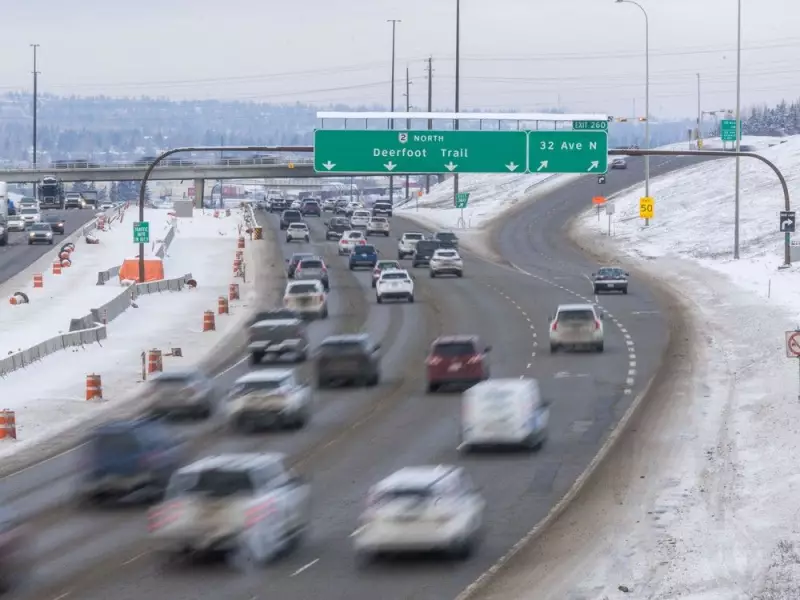
Alberta's ambitious plan to nearly double oil production to eight million barrels per day by 2035 faces a critical obstacle: the province's pipeline network is rapidly approaching maximum capacity, creating a scenario reminiscent of rush-hour gridlock on Calgary's Deerfoot Trail.
The Coming Capacity Crunch
According to University of Alberta energy economist Andrew Leach, Alberta's pipeline system is getting pretty close to functionally full now. The comparison to traffic congestion is particularly apt - just as adding more vehicles to a highway eventually leads to slowdowns, the pipeline network faces similar constraints as production increases beyond current levels of 4.2 million barrels per day.
The Alberta government under Premier Danielle Smith is actively pursuing a memorandum of understanding with Ottawa to fast-track approval for a proposed oil pipeline to the Pacific Coast. This push comes despite significant opposition from British Columbia Premier David Eby, environmental organizations, and some Indigenous communities.

Learning from Past Bottlenecks
Canada has already experienced the economic consequences of pipeline congestion. In 2018, the price differential between Western Canadian Select heavy oil and West Texas Intermediate crude widened dramatically, at one point exceeding $45 per barrel due to transportation constraints.
Recent developments provide some relief. South Bow Corp. CEO Bevin Wirzba noted that the startup of the Trans Mountain expansion last year has alleviated some of the oil egress issues that plagued the sector in previous years. Additionally, Enbridge recently approved a US$1.4-billion optimization of its pipeline network, buying the industry more time before capacity limits are reached.
The Path Forward
While these system expansions help, they may not be sufficient to handle the dramatic production growth Alberta envisions. The province's target of eight million barrels per day by 2035 represents nearly a doubling of current output, requiring substantial new infrastructure to transport this additional volume to market.
The ongoing negotiations between Alberta and the federal government aim to place the proposed Pacific Coast pipeline on the federal government's major projects list for expedited approval. However, with strong opposition from multiple fronts and the memory of the 2018 price crisis still fresh, the path forward remains challenging for Alberta's energy ambitions.