Canada to Release 24 Million Barrels in Global Oil Market Stabilization Effort
Canada has announced it will supply 23.6 million barrels of oil and significantly ramp up natural gas exports over the coming months as part of a coordinated international response to stabilize energy markets that have been severely disrupted by the ongoing Iran war. Energy Minister Tim Hodgson confirmed the commitment in a statement released on Friday via social media platform X.
International Energy Agency's 400-Million-Barrel Initiative
The Canadian contribution supports a much broader action involving 32 member countries of the International Energy Agency (IEA), which collectively plan to release approximately 400 million barrels from their reserves. This represents one of the most substantial coordinated market interventions in recent history, aimed at addressing what the IEA has described as "the biggest oil market disruption in history."
Unlike the United States, Canada does not maintain a formal strategic petroleum reserve. Instead, the country's contribution will come directly from planned production increases, according to government officials familiar with the matter. As the world's fourth-largest oil supplier overall and the second-largest among IEA members, Canada's participation carries significant weight in global energy markets.
Market Impact of Middle East Conflict
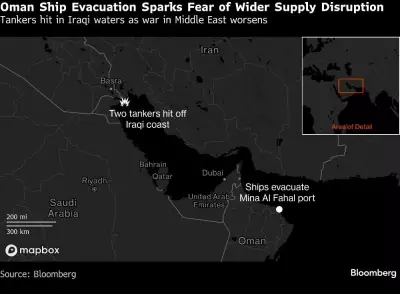
The Middle East conflict has effectively closed the Strait of Hormuz in the Persian Gulf, preventing substantial quantities of oil and gas from leaving the region. This geopolitical development has sent energy prices soaring, with Brent crude settling above $100 per barrel for two consecutive days—reaching its highest level in more than three years.
Prime Minister Mark Carney emphasized that the 23.6 million barrels represent upcoming exports from Canadian companies. "The oil market is tight. That's the reality," Carney stated during remarks in Holmenkollen, Norway. "In a tight market, the last thing you need is to have more problems. And Canada is part of the solution in that regard."
Canada's Production Constraints and Future Plans
While Canada has some "margin to maneuver," according to Carney, the country faces significant constraints due to limited pipeline capacity. The government is actively exploring options to boost supply, including delaying planned maintenance activities at production facilities.
Looking forward, Canada aims to increase investment in its oil industry, including supporting the Alberta government's proposal for a new west-coast pipeline. Additionally, Carney highlighted discussions with Equinor ASA executives regarding the Bay du Nord offshore oil development project off Canada's east coast, which he described as "a very attractive project." Equinor has targeted 2027 for a final investment decision on this major development.
Comparative International Responses
The United States plans to release 172 million barrels from its emergency strategic petroleum reserve, a process expected to take approximately 120 days to fully implement. This American contribution represents the largest single commitment within the broader IEA initiative.
Canada's participation in this international effort demonstrates the country's commitment to global energy market stability during a period of unprecedented disruption. As geopolitical tensions continue to impact energy flows worldwide, coordinated responses like this IEA initiative will likely remain crucial for maintaining market equilibrium and preventing extreme price volatility that could harm both producers and consumers globally.