

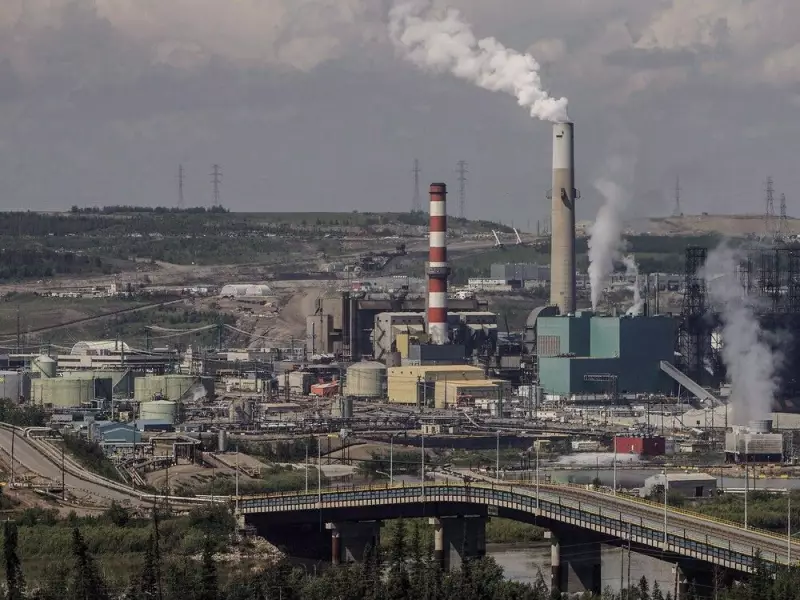
Canada's oil sands industry is staging a remarkable comeback, emerging from years of playing second fiddle to United States shale production as market dynamics shift dramatically north of the border.
Pipeline Expansion Fuels Production Surge
The catalyst for this renewed optimism stems from the recently expanded Trans Mountain oil pipeline, which has finally broken years of capacity constraints that previously capped output and pressured Canadian crude prices. This critical infrastructure project is now delivering Canadian oil to lucrative Asian markets, creating new revenue streams for producers.
Production data confirms the turnaround story. Canadian crude output reached a record-high in June following the pipeline's expansion. According to Bank of Montreal analysis, production is projected to grow by another 300,000 to 400,000 barrels per day, potentially reaching 6 million daily barrels by 2030.

Investor Confidence Returns to Oil Sands
The improved market access has translated into significant financial gains for Canada's energy sector. The stock prices of major oil sands producers including Imperial Oil Ltd., Suncor Energy Inc., Cenovus Energy Inc., and MEG Energy Corp. have dramatically outperformed market benchmarks. These companies have seen their shares outpace the S&P Global Oil Index by as much as three-fold over the past year.
Perhaps more telling is the shifting investor landscape. U.S. institutional investors' stake in oil sands companies has climbed to 65%, up substantially from just 40% a decade ago, according to BMO data. This renewed international interest underscores the changing perception of Canada's energy prospects.
Structural Advantages Over U.S. Shale
The resurgence marks a fundamental shift in global oil markets. As production from massive U.S. shale basins like the Permian shows signs of peaking, investors are increasingly looking to Canada where steady crude supplies are positioned to flow for decades.
Unlike U.S. shale operations that require continuous drilling of new wells simply to maintain output levels, oil sands production declines at a much slower rate. This structural difference provides Canadian producers with significant cost advantages.
Four of the five lowest-cost, large-cap oil companies in North America are now oil sands producers, according to BMO analyst Randy Ollenberger. "They don't have to continually invest capital to offset decline," Ollenberger explained. "They only have to invest capital to maintain their facilities and, so, that gives them a cost advantage."
The improved economics are visible in pricing differentials. While global supply pressures continue to weigh on crude benchmarks, the Trans Mountain expansion has strengthened local prices for heavy oil. Canadian crude now trades at a US$10-US$12 per barrel discount to the U.S. benchmark, a substantial improvement from the US$30 or wider discounts that plagued the industry before the pipeline expansion.
This represents a dramatic reversal from a decade ago when booming shale production combined with OPEC output flooded markets and crushed crude prices. That period saw oil majors including Shell PLC, ConocoPhillips, TotalEnergies SE and Chevron Corp. divest their Canadian operations, ultimately leading to industry consolidation among a handful of local producers.
According to Enverus Senior Analyst Michael Berger, this consolidation forced the industry to become more efficient, positioning it for the current recovery. The combination of improved market access, structural cost advantages, and renewed investor confidence suggests Canada's oil sands sector has entered a new era of stability and growth.






