According to a senior HSBC executive, China has positioned itself with a uniquely powerful advantage in the global artificial intelligence race, and it stems from its dominance in clean energy rather than just technological prowess.
The Energy Bottleneck for AI
Julian Wentzel, the chief sustainability officer at HSBC Holdings PLC, stated in a recent interview that the supply of power has emerged as the most significant constraint on data centre capacity, even surpassing the availability of semiconductors. This insight was echoed by Microsoft Corp. chief executive Satya Nadella, highlighting a critical challenge for the AI industry.
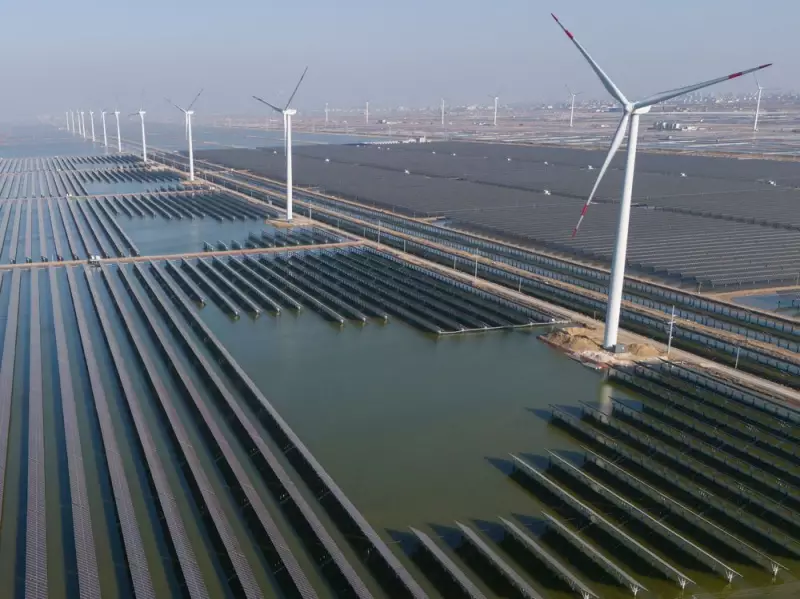
Wentzel argues that China's massive build-out of renewable energy infrastructure places the country in an exceptionally strong position to compete, particularly against the United States. China is on track to break its own record for renewable power installation this year, a relentless expansion that fundamentally enhances its economic cost structure.

The Zero-Cost Advantage of Renewables
The core of China's advantage lies in the economics of energy. Wentzel explained that while fossil fuels like natural gas incur ongoing costs for extraction, transport, and distribution, renewable energy infrastructure has a different financial profile.
"Once you've got the architecture in place, as the demand grows, you can deliver that demand at zero cost," he said. After the initial capital investment is paid off, producing extra energy carries effectively no incremental cost. This creates a "very powerful lever" for underlying economic growth as the cost of power relative to total GDP declines over time.
Contrasting Approaches and Global Implications
This perspective stands in stark contrast to the policy position in the U.S., where Energy Secretary Chris Wright has argued that a rapid clean energy transition would raise costs and hinder growth. Meanwhile, the immense energy demands of AI are creating new opportunities for oil and gas companies; Chevron Corp. recently announced a deal to supply natural gas-fired power to a data centre in West Texas.
While the race for AI supremacy involves chips, supply chains, and key metals like copper, energy supply is the foundational element. Countries with greater access to low-cost renewables hold a significant long-term edge. This was demonstrated earlier this year when Chinese startup DeepSeek showed it could produce AI with much lower costs and greater energy efficiency than its U.S. rivals, challenging Western developments on both energy and architectural fronts.