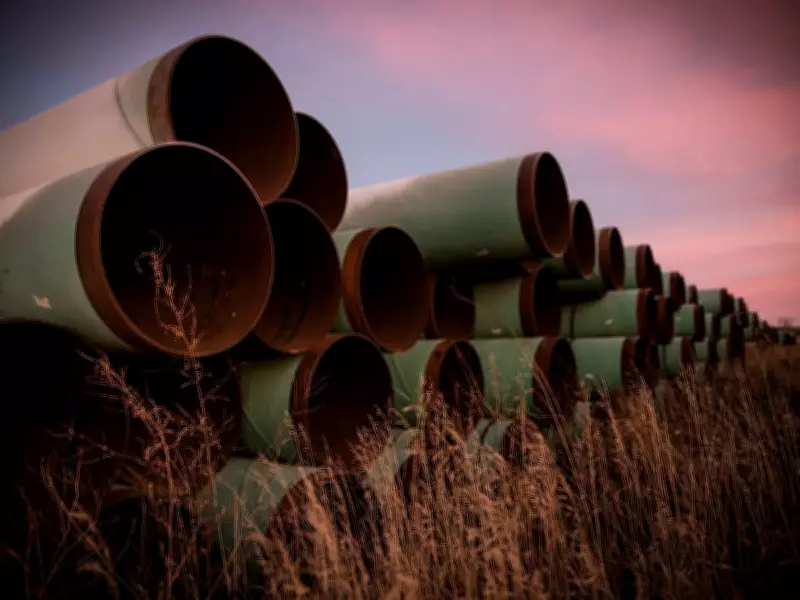
The prospect of reviving the Keystone XL pipeline project has captured significant attention among readers, particularly in Alberta, where energy infrastructure remains a critical economic issue. Miles of unused pipe, originally prepared for the Keystone XL project, sit idle in a lot outside Gascoyne, North Dakota, following the project's cancellation. This unused material, along with pipe already laid between Hardisty, Alberta, and the U.S. border, could potentially provide a substantial "head start" for any new pipeline initiative, according to industry observers.
A Strategic Approach to Pipeline Development
The concept under discussion involves Alberta delivering its oil products to the U.S. border, with American companies then responsible for building the necessary pipeline infrastructure through various states to reach refining locations. This strategy aims to offload much of the regulatory and landowner risks onto U.S. entities, thereby derisking Alberta producers. At the border, the oil would change ownership, further insulating Alberta from potential liabilities.
Brian McConaghy of Foothills County commented on the idea, noting that while it may seem like a pipe dream, it might not be entirely unrealistic. The existing infrastructure and materials could reduce costs and timelines for any revival effort, making the proposition more feasible than starting from scratch.

Broader Concerns: Seniors' Benefits and City Spending
In related discussions, concerns have been raised about Premier Danielle Smith's proposed tightening of eligibility criteria for seniors' benefits. Critics argue that Smith has not provided proof for claims that seniors are moving to Alberta solely to access social programs. Helen Jones of Okotoks emphasized that seniors, regardless of income, contribute positively to society when healthy and deserve respect for their lifelong contributions.
Jones pointed out that Brampton, Ontario, offers benefits to all legal resident seniors aged 65 and older, including free access to recreation centers, fitness programs, public transit passes, and snow removal assistance. She advocated for benefits based on age rather than income, stressing that wellness-focused policies could reduce strain on societal systems.
City Infrastructure Priorities Questioned
Additionally, city spending has come under scrutiny, with critics arguing that previous municipal leadership mismanaged funds by investing $3 billion in a new entertainment center and the Green Line project, rather than prioritizing water and sewage maintenance. They suggest that continuing to use the Saddledome and enhancing bus services along the Green Line route could have saved billions, ensuring reliable water supplies for the future.
As debates over energy infrastructure, social policies, and municipal spending continue, the potential revival of Keystone XL remains a topic of acute interest, balancing between ambitious dreams and practical possibilities in Alberta's evolving landscape.