Oil Prices Surge and Global Equities Retreat Amid Escalating U.S.-Iran Tensions
Oil prices experienced a significant jump while global equities pulled back on Monday, as financial markets grew increasingly concerned that the ceasefire between the United States and Iran might not hold. Tensions over the critical Strait of Hormuz escalated, contributing to heightened volatility and uncertainty across international markets.
Market Movements and Geopolitical Risks
Brent crude futures rose approximately 5% to $94.92 a barrel, reflecting fears of potential supply disruptions. Meanwhile, MSCI’s world share index declined around 0.26%, with Europe’s cross-regional STOXX 600 dropping 1.1%. In contrast, Asian equity markets advanced, shrugging off some risks, while S&P 500 futures were 0.54% lower.
Concerns intensified on Monday following reports that the U.S. had seized an Iranian cargo ship attempting to run its blockade, prompting Iran to vow retaliation. The U.S. has maintained a blockade of Iranian ports, and Iran has lifted and reimposed its own blockade on marine traffic through the Strait of Hormuz, a vital chokepoint for global oil shipments.

Shipping Disruptions and Economic Impact
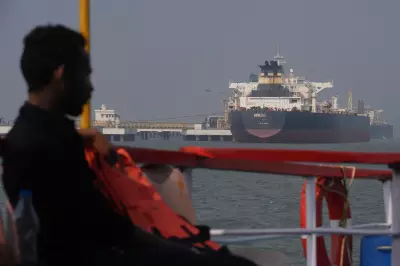
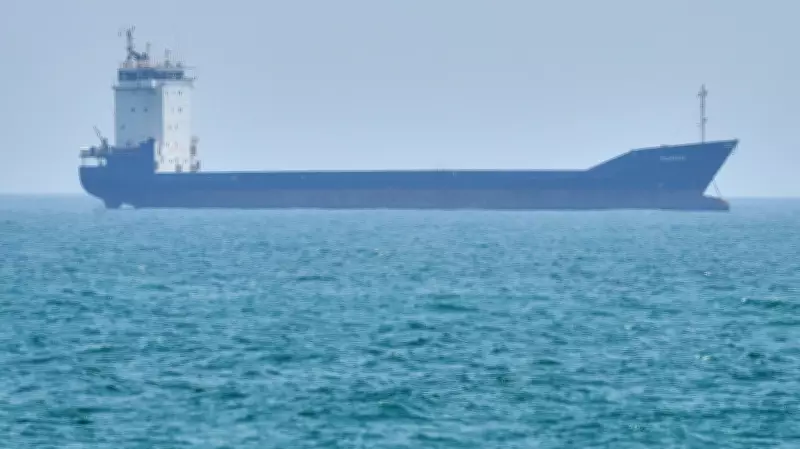
Shipping traffic through the Strait of Hormuz remained at a virtual standstill on Monday, with only three crossings recorded in a 12-hour period, according to shipping data. This marked a sharp decline from the previous Saturday, when Kpler data showed more than 20 vessels carrying oil products, metals, gas, and fertilizer had passed through, making it the busiest day since March 1.
Sandra Horsfield, an economist at Investec, commented on the market volatility, stating, "Markets try to cling on to every bit of news that may point to one outcome or another, hence these large swings. But it is still a very uncertain and volatile situation." She noted that while markets have pulled back, moves made on Friday—when Iran announced it would open the Strait of Hormuz—had not been fully retraced, suggesting some improved sentiment still prevails.
Uncertainty in Peace Talks and Broader Market Effects
The outlook for further negotiations between the U.S. and Iran appeared uncertain. Iran rejected new peace talks with the U.S., as reported by its state news agency on Sunday, shortly after U.S. President Donald Trump stated he was sending envoys for talks in Pakistan and would launch new strikes on Iran unless it accepted his terms.
Derren Nathan, head of equity research at Hargreaves Lansdown, highlighted the potential for continued volatility, saying in a note, "Whether this impasse proves to be merely a detour on the path to a resolution remains to be seen, but more volatility would seem the most likely outcome."
In bond markets, yields on benchmark 10-year Treasuries rose 2.4 basis points to 4.2678%, while German 10-year government bond yields increased 2.9 basis points to 2.9947%. The dollar broadly steadied, trading at $1.1773 per euro after being sold for much of the past two weeks.
Focus on Economic Data and Geopolitical Barometers
Wall Street indexes touched record highs on Friday, supported by expectations of robust first-quarter earnings, with the bulk of reports due this week. Upcoming economic data, including British inflation figures, U.S. retail sales, and European Purchasing Managers’ Index numbers, will also be closely watched. However, much of the market's focus remains on Gulf shipping and geopolitical risks.
Bob Savage, head of markets macro strategy at BNY, emphasized the critical role of the Strait of Hormuz, stating, "The critical barometer of geopolitical risk has been distilled into one data point: The number of ships transiting the Strait of Hormuz. Peace talks matter, but the immediate focus is on oil and other supply shortages driving inflation."
Outside the Middle East, British Prime Minister Keir Starmer is slated to address Parliament on Monday, facing calls for his resignation over his handling of the appointment of Peter Mandelson as U.S. ambassador, despite Mandelson failing a vetting process.