Ontario has taken a major step toward expanding its nuclear energy capacity, laying the foundation for the province's first new nuclear reactor in over 30 years. A heavy-duty crane on the north shore of Lake Ontario recently placed a 2.1-million-pound component resembling a giant bottle cap at the bottom of a 35-metre shaft, forming the base of a new small modular reactor (SMR) at the Darlington Nuclear Generating Station.
Energy Minister Highlights Achievement
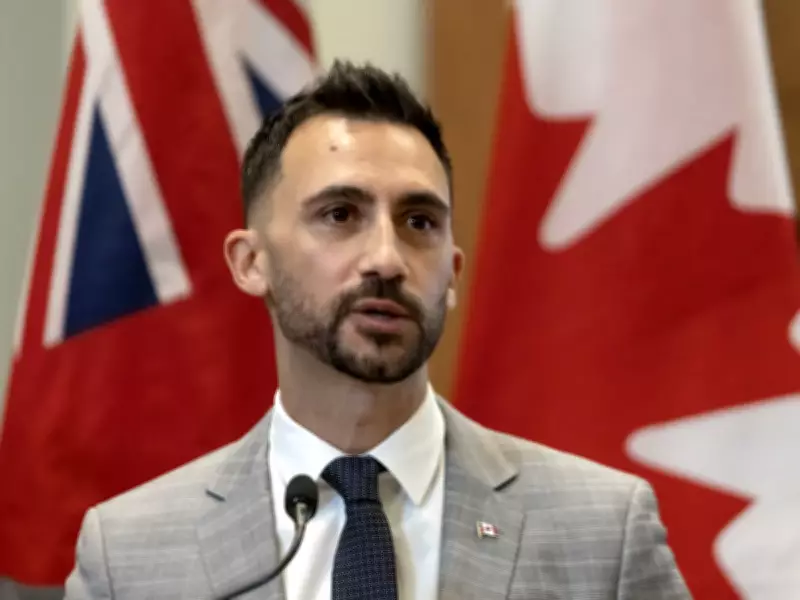
Ontario Energy Minister Stephen Lecce hailed the milestone, stating, "Ontario just executed with great precision the first foundation of a new nuclear reactor in Ontario in over 30 years. This is a major achievement." The project is billed as the Western world's first SMR and is part of Lecce's vision to transform the province into an energy superpower.
Meeting Surging Electricity Demand
Ontario is betting on nuclear power to satisfy its rapidly growing electricity needs. Demand is expected to rise by 2% annually for the next decade and by 75% overall by 2050. The province also aims to export its nuclear expertise to fuel economic growth. The first of four 300-megawatt reactors at Darlington is targeted for completion by 2030, with the remaining units expected online in the mid-2030s. The total estimated cost for all four reactors is $20.9 billion.

Nuclear Power's Resurgence
Nuclear power has faced challenges due to high-profile meltdowns at Fukushima and Chernobyl, as well as cost overruns and construction delays. However, Lecce expressed confidence that Ontario can deliver nuclear projects "on time and on budget." The province recently completed a $12.8-billion refurbishment of four 878-megawatt reactors at Darlington, months ahead of schedule and $150 million under budget. Additional refurbishments are underway at the Bruce and Pickering nuclear stations, with plans for more reactors.
Cost and Supply Chain Advantages
Lecce argued that nuclear power offers the best cost and risk profile, citing the Independent Electricity Systems Operator's analysis. He emphasized that nuclear provides 24/7 firm power, is made in Canada, and relies on over 90% domestic supply chain. While some financial firms like Lazard Inc. suggest renewables are cheaper, Lecce countered that the true cost of renewables increases when accounting for land and battery storage.