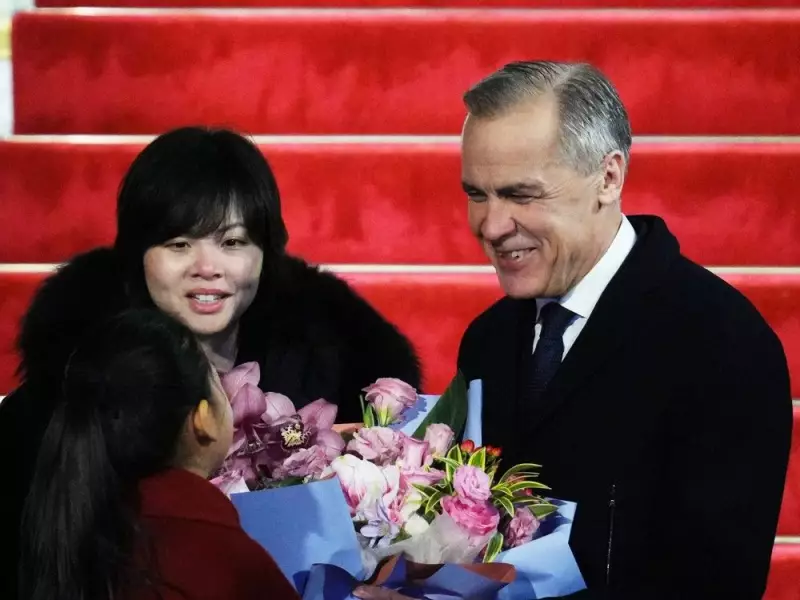
Prime Minister Mark Carney has heralded a "new era" in Canada-China relations, renewing a series of long-expired agreements with the Asian superpower during a high-profile visit to Beijing. However, the diplomatic reset offered no immediate relief from punishing tariffs on key exports like Canadian canola and Chinese electric vehicles.
Renewed Agreements Signal Thaw in Frigid Relations
In the Great Hall of the People on Thursday, January 14, 2026, Carney and Chinese Premier Li Qiang oversaw the signing of over half a dozen memoranda of understanding (MOUs) and letters of intent. The signings involved several Canadian ministers, including Industry Minister Mélanie Joly, and Ambassador Jennifer May.
The renewed pacts cover cooperation in energy, lumber, policing, public safety, culture, and tourism. A significant component was the re-upping of a 2017 energy cooperation MOU and a 2014 nuclear energy agreement, aiming to re-establish formal dialogue between the two nations' resource ministries on sectors including crude oil, liquefied natural gas, and liquefied petroleum gas.

"China is prepared to work with Canada to follow through on the important consensus between our leaders and move forward our strategic forward on a trajectory of healthy, steady and sustainable development," Premier Li Qiang stated through a translator.
Carney responded by calling the meeting "the most auspicious start to the new year and a new era of relations between Canada and China." The countries also signed a new economic and trade cooperation "roadmap," intended to lay the foundation for reigniting trade after years of diplomatic strain that began in 2018.
Stability Over the U.S., But Tariffs Linger
The push to deepen ties with China is a cornerstone of Carney's economic strategy to double non-U.S. exports within a decade, reducing Canada's heavy reliance on the American market. Industry Minister Mélanie Joly underscored this point, noting that trade discussions with China are currently "more predictable and stable" than those with Canada's southern neighbour.
Despite the optimistic rhetoric and renewed frameworks, the first day of Carney's trip yielded no breakthrough on the contentious tariff war. Canada's 100 per cent tariffs on Chinese electric vehicles, imposed in 2024, remain in place. In retaliation, China's tariffs of 75 to 100 per cent on Canadian canola imports, along with 25 per cent levies on pork and seafood, also stand.
These measures have had a severe impact, with the canola tariffs effectively halting all Canadian exports to what was the industry's second-largest international market.
A Foundation for Future Talks
Analysts view the renewal of these old, non-binding agreements as a necessary first step to rebuild formal channels of communication that had lapsed during the diplomatic deep freeze. While the MOUs themselves do not mandate specific actions or resolve immediate disputes, they provide a structured platform for future negotiations.
The outcome of Carney's Beijing visit suggests a Canadian government walking a careful line: seeking to diversify trade and establish predictable relations with a major economic power, while navigating complex geopolitical tensions and unresolved trade barriers that continue to hurt key Canadian industries.