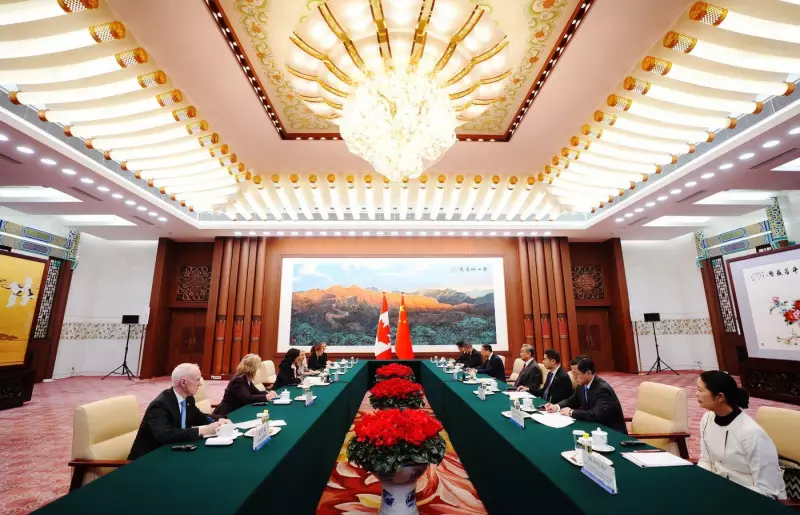
Prime Minister Mark Carney has embarked on a significant diplomatic mission to China, signaling a push for a renewed and recalibrated relationship between Ottawa and Beijing. The trip, which began on Wednesday, January 15, 2026, is framed by the Carney government as an effort to navigate a "new geopolitical environment" and establish a "new era" of bilateral engagement.
Reviving Economic Ties in a Changed World
The central objective of the Prime Minister's visit is to revive a relationship that can significantly boost Canada's economy. For years, economic exchanges with China have been a cornerstone of growth for key Canadian sectors, from natural resources to agriculture and education. However, diplomatic tensions and evolving global power dynamics have cooled interactions.
Carney's administration is now seeking to thaw these relations with a pragmatic focus on mutual economic benefit. The Prime Minister is expected to meet with senior Chinese officials and business leaders to discuss trade, investment, and areas of potential cooperation. The challenge lies in advancing Canadian economic interests while acknowledging and managing profound differences on issues of human rights and regional security.

A Delicate Diplomatic Balancing Act
This outreach occurs amidst what analysts describe as a fundamentally altered international landscape. The term "new geopolitical environment" underscores the complexities Canada faces, including heightened U.S.-China rivalry and supply chain realignments. Carney's approach appears to be one of cautious re-engagement, aiming to secure stability and predictability for Canadian exporters and investors.
The success of this mission is not guaranteed. Public opinion in Canada remains wary of Beijing's influence, and any perceived concessions could draw domestic criticism. Conversely, failing to establish a functional dialogue risks leaving Canada economically isolated from one of the world's largest markets.
Implications for Canada's Future Prosperity
The outcome of this diplomatic push will have tangible consequences for Canada's economic future. A successful reset could reopen doors for Canadian canola, pork, lumber, and other commodities, while also fostering collaboration in green technology and innovation. It could also provide a framework for managing disputes through dialogue rather than retaliatory measures.
However, experts caution that this "new era" will likely look different from the peak of Canada-China relations in the past. It is expected to be more transactional, more guarded, and heavily influenced by Canada's alliances with other democratic nations. Prime Minister Carney's task is to carve out a sustainable path that protects Canadian values while seizing concrete opportunities for growth and job creation at home.
The trip represents a critical test of the government's foreign policy doctrine and its ability to advance national interests in an increasingly fractured world. All eyes will be on the announcements and agreements that emerge from Beijing in the coming days.