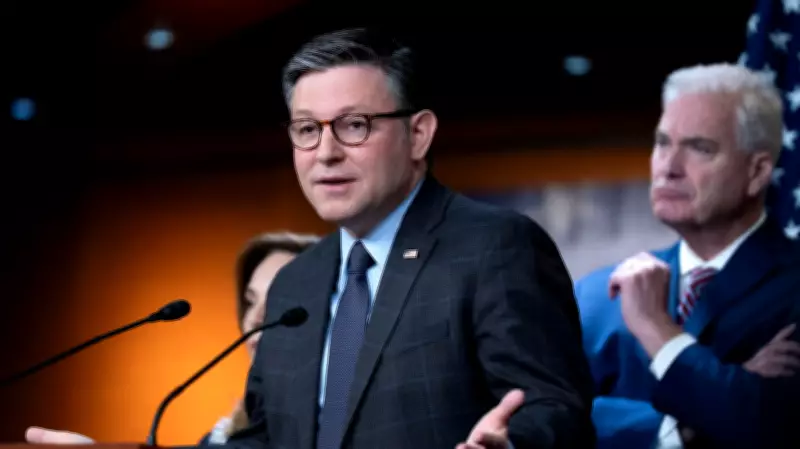
In a rare and largely symbolic confrontation, the House of Representatives voted on Wednesday to push back against President Donald Trump's tariffs on Canada. The resolution, which passed with a tally of 219-211, marks one of the first instances where the Republican-controlled House has directly challenged the president over a key policy initiative. This move seeks to terminate the national emergency that Trump declared to impose the tariffs, though actually reversing the policy would require Trump's own support, which is highly improbable. The resolution now advances to the Senate for further consideration.
A High-Stakes Political Moment
This vote provides a clear snapshot of the growing unease within the House regarding the president's trade direction, particularly as economic issues gain traction among voters ahead of the midterm elections. Trump has consistently advocated for tariffs as a tool to pressure U.S. trade partners into negotiations. However, lawmakers are facing significant pressure from businesses entangled in trade wars and constituents grappling with rising prices and pocketbook concerns.
Representative Gregory Meeks of New York, the top Democrat on the House Foreign Affairs Committee and author of the resolution, framed the vote in stark terms. "Today's vote is simple, very simple: Will you vote to lower the cost of living for the American family or will you keep prices high out of loyalty to one person ― Donald J. Trump?" he stated during the debate. The Senate has previously voted to reject Trump's tariffs on Canada and other nations, expressing its displeasure. Yet, for any tariff rollbacks to become law, both chambers must approve the resolution and send it to Trump for his signature or veto.

GOP Defections Force the Vote
House Speaker Mike Johnson attempted to avert this showdown by urging lawmakers to await a pending Supreme Court ruling on a lawsuit related to the tariffs. He orchestrated a complex rules change to block floor action. However, Johnson's strategy unraveled late Tuesday when Republicans defected during a procedural vote, ensuring the Democratic measure could proceed.
"The president's trade policies have been of great benefit," Johnson, a Republican from Louisiana, had argued. "And I think the sentiment is that we allow a little more runway for this to be worked out between the executive branch and the judicial branch." Despite his efforts, Johnson was seen lobbying holdout Republican lawmakers during a lengthy procedural vote, but the numbers ultimately turned against him.
Kevin Hassett, director of the White House's National Economic Council, expressed disappointment following the vote. "We're disappointed in what the people have done," he told reporters on Wednesday morning. "The president will make sure they don't repeal his tariffs."
Terminating Trump's National Emergency
The resolution introduced by Meeks aims to end the national emergency that Trump declared a year ago through an executive order. The administration justified this declaration by citing illicit drug flow from Canada as an unusual and extraordinary threat, which it argued permits the imposition of tariffs outside the terms of the U.S.-Mexico-Canada trade agreement.
Representative Brian Mast of Florida, the Republican chairman of the House Foreign Affairs Committee, defended the policy, emphasizing the fentanyl crisis. "Let's be clear again about what this resolution is and what it's not. It's not a debate about tariffs. You can talk about those, but that's not really what it is," Mast said. "This is Democrats trying to ignore that there is a fentanyl crisis."
Experts note that while fentanyl is produced in Canada and smuggled into the U.S., it is primarily manufactured by cartels in Mexico and enters through land crossings in California and Arizona, with Canadian contributions being significantly lesser.
Torn Between Trump and Tariffs
Ahead of the vote, some rank-and-file Republican lawmakers voiced their discomfort with the choices at hand. Democrats, along with a few renegade Republicans, urged their colleagues to assert legislative authority rather than ceding excessive power to the president on trade and tariff policy.

Representative Don Bacon, a Republican from Nebraska, was unconvinced by Johnson's call to delay until the Supreme Court's decision. "Why doesn't the Congress stand on its own two feet and say that we're an independent branch?" Bacon questioned. "We should defend our authorities. I hope the Supreme Court does, but if we don't do it, shame on us." Bacon, who is retiring rather than facing reelection, also criticized tariffs as detrimental economic policy.
Other Republicans remained undecided after Johnson's failed gambit. "At the end of the day, we're going to have to support our president," said Representative Keith Self, a Republican from Texas. Meanwhile, Representative Darrell Issa, a Republican from California, expressed reluctance to constrain the president on trade, stating he is prepared to support the tariffs on Canada "at this time."
This development follows Trump's recent threat to impose a 100% tariff on goods imported from Canada over that country's proposed trade deal with China, escalating tensions with the longstanding U.S. ally and Prime Minister Mark Carney. The Associated Press contributed to this report.