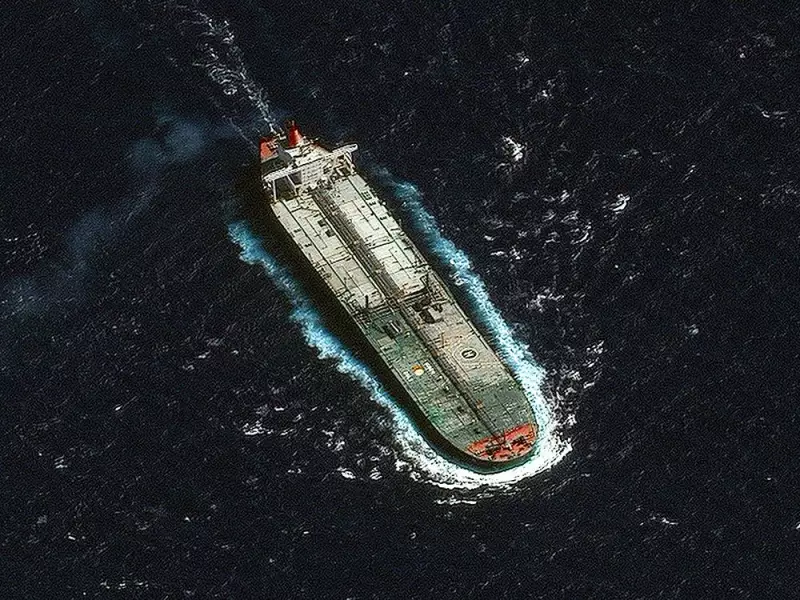
In a significant shift on the high seas, the shadowy network of tankers known as the 'dark fleet' is increasingly seeking the protection of the Russian flag. This strategic move comes as a direct response to a recent escalation in U.S. enforcement actions, particularly the seizure of vessels involved in transporting sanctioned Venezuelan oil.
A Surge in Russian Registration
Data from maritime intelligence firm Starboard reveals a dramatic spike in vessels switching their registration to Russia. Since the beginning of December, at least 26 ships have made the switch, with the majority occurring after a pivotal event on December 10. On that date, U.S. authorities seized the Skipper supertanker off the coast of Venezuela. This number marks a sharp increase from just six reflagging events in November and only 14 over the preceding five months.
The dark fleet, estimated at nearly 1,500 tankers carrying oil from Russia, Iran, and Venezuela, has traditionally favored the flags of smaller nations like Panama, Guinea, and Comoros. Approximately 13% are already registered to Moscow. The tactic of using 'false flags' is a cornerstone of dark fleet operations, allowing vessels to sidestep international regulations while maintaining a veneer of legitimacy.

Geopolitical Cover and Escalating Stakes
Analysts interpret this rush toward the Russian flag as a calculated gamble by ship owners. They are betting that Moscow will provide political and diplomatic cover that other nations will not, especially in the face of aggressive U.S. interdiction efforts. Charlie Brown, a senior adviser at the advocacy group United Against Nuclear Iran, which tracks the dark fleet, explained the implications.
"This may offer a new potential solution for the illicit dark-fleet networks, but it also raises the stakes," Brown stated. "Because it underscores that sanctions evasion is no longer just a maritime compliance problem, but a strategic challenge involving state protection and geopolitical risks."
These heightened risks were vividly illustrated in the international chase of the tanker Bella 1. Sanctioned by the U.S. in 2024, the vessel initially evaded capture near Venezuela in mid-December. It then headed north, undergoing a rapid transformation: it switched from a fake Guyanese registration to the Russian flag, changed its name to Marinera, and its crew even painted Moscow's tricolor on the hull.
A Direct Confrontation Narrowly Avoided
The pursuit of the Marinera nearly sparked a direct confrontation between major powers. According to sources familiar with the sensitive matter, a Russian naval ship was dispatched to escort the tanker but failed to reach it in time. U.S. forces successfully boarded the supertanker south of Iceland last week, seizing control of the vessel.
This incident is part of a broader crackdown. The United States has now seized five tankers involved in the Venezuelan oil trade. With President Donald Trump's recent threats to impose tariffs on countries purchasing Iranian goods, the maritime industry is watching closely to see if Washington will next target vessels carrying crude from the Islamic Republic.
The profile of the 26 tankers that recently changed flags underscores the global and perilous nature of this trade. These vessels, all sanctioned by at least one Western government, are currently scattered across the world's waterways—from the Baltic Sea to the Suez Canal and the Yellow Sea—though some may be falsifying their locations. Their ownership traces back to a web of obscure companies, including eight linked to Hong Kong-based Glory Shipping HK Ltd. and several connected to Russia-registered firms, New Fleet Ltd. and North Fleet Ltd., which share an address with a unit of the state-owned Sovcomflot PJSC in St. Petersburg.