Trump's Tariff Threat Escalates Tensions Ahead of Crucial CUSMA Review
Former U.S. President Donald Trump's recent threat to impose 100% tariffs on Canada if it reaches a trade agreement with China has injected significant uncertainty into the upcoming review of the Canada-United-States-Mexico Agreement (CUSMA). This aggressive stance signals what could be months of contentious negotiations between the three North American partners.
Direct Threat Over China Relations
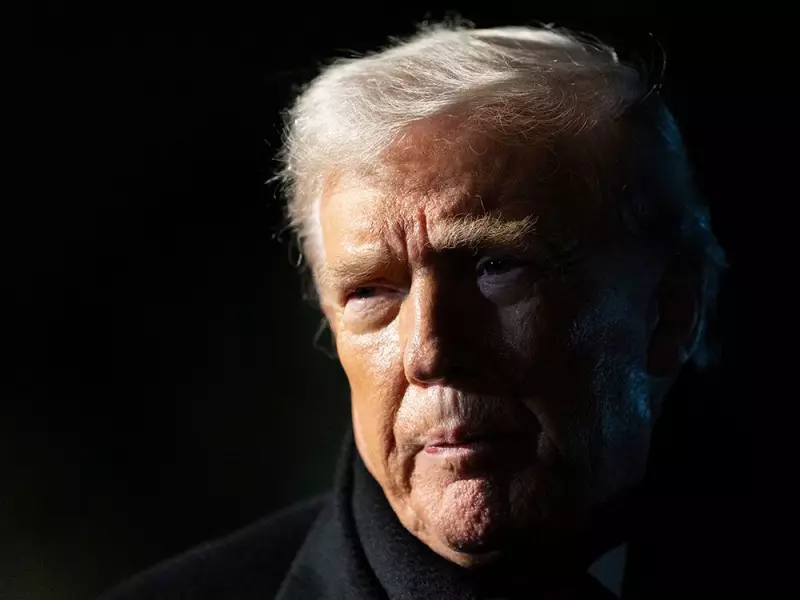
On Saturday, Trump specifically criticized Prime Minister Mark Carney for expanding economic ties with China, warning that Canada would be "sorely mistaken" to think the United States would allow it to become a "drop off port" for Chinese goods. The former president's explicit threat of 100% tariffs represents an early escalation in what was already expected to be a challenging period of trade diplomacy.
Canadian Officials Push Back
In response to Trump's comments, Canada's Minister in charge of U.S. trade, Dominic LeBlanc, firmly stated that there is "no pursuit of a free trade agreement with China." LeBlanc characterized the recent limited agreement between Canada and China as simply about resolving tariff disputes, describing the U.S.-Canada relationship as a "remarkable partnership."

Details of the China-Canada Agreement
The agreement announced on January 16 involves specific reciprocal measures:
- China will lower tariffs on Canadian food products
- Canada will drop a 100% import tax on Chinese electric vehicles
- A cap of 49,000 electric vehicles per year will be established for Chinese exports to Canada
Prime Minister Carney clarified that this arrangement represents less than 3% of the Canadian market for new cars and trucks, describing it as "entirely consistent" with Canada's obligations under CUSMA. He characterized the move as returning to 2023 tariff levels with the addition of the vehicle cap.
Broader Implications for CUSMA Review
While Trump's remarks specifically addressed Canada's tariff truce with China, they also portend a heated back-and-forth ahead of the mandatory CUSMA review scheduled for this year. The timing is particularly significant as Carney has been drawing international attention for his Davos speech about standing up to great powers.
Economic Risks and Vulnerabilities
Dominique Lapointe, a macro strategist with Manulife Investment Management, noted that Trump's broadside "clearly adds downside risks to the upcoming formal trade negotiations between the U.S. and Canada." Canada remains particularly vulnerable in these discussions because exports to the United States represent a substantial proportion of its economy.
Currently, many Canadian goods remain tariff-free when shipped under CUSMA protections, but this exemption could be at risk during the review process. Analysts warn that losing this preferential access would be devastating for Canada, potentially pushing effective tariffs on U.S.-bound exports well above the current 5% to 7% rate estimated by most economists.
Sectoral Vulnerabilities
Trump's previous sectoral tariffs have already impacted key Canadian industries:
- Automotive sector facing significant pressure
- Steel and aluminum industries experiencing ongoing challenges
- Lumber sector continuing to navigate trade restrictions
Despite these tensions, most economists surveyed by Bloomberg still anticipate a positive outcome to the CUSMA talks, though Trump's latest intervention has undoubtedly increased the level of uncertainty surrounding the negotiations.