Trump's Tariff Rationale: Personal Grievance Over Policy?
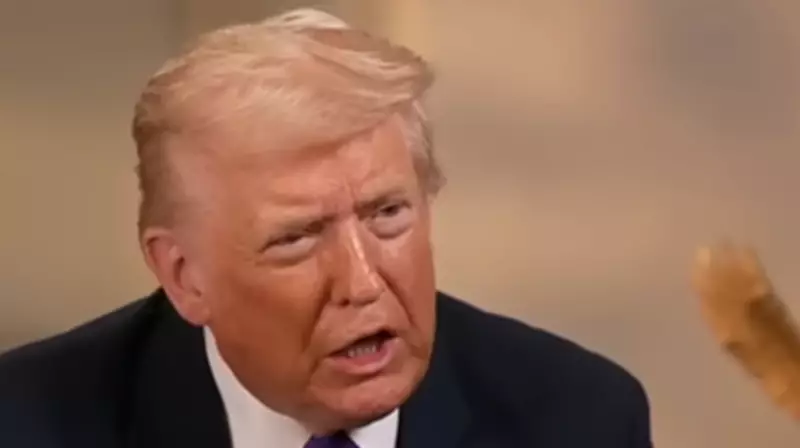
Former President Donald Trump is facing renewed criticism after detailing how personal interactions, rather than strategic economic policy, influenced his tariff decisions against Switzerland. In a recent Fox Business interview with Larry Kudlow, Trump recounted an incident that legal experts say could undermine his administration's defense of unilateral tariff powers currently before the Supreme Court.
The Swiss Incident: A Question of Facts and Figures
Trump claimed the United States had a $42 billion trade deficit with Switzerland, a number that economic analysts quickly disputed. Experts note this figure ignores trade in services, which would actually reduce the deficit to approximately $8 billion. More significantly, Trump described imposing a 30% tariff on Swiss goods, then increasing it to 39% after what he characterized as an "aggressive" phone conversation with a Swiss leader.
"I didn't really like the way she talked to us, so instead of giving her a reduction, I raised her to 39%," Trump stated during the interview.

Factual Errors and Investigative Fallout
The account contains several factual problems. Switzerland does not have a prime minister; Trump likely spoke with then-Swiss President Karin Keller-Sutter. Furthermore, Swiss media reports indicate the tariff was eventually reduced to 15% after a delegation presented Trump with gifts including a Rolex watch and a gold bar—a decision now under investigation by Swiss authorities.
Legal Implications for Supreme Court Case
This revelation comes at a critical juncture. Trump's legal team has argued before the Supreme Court that the president needed to act without Congressional approval on tariffs because trade imbalances created a "national emergency" requiring immediate action. Trump's admission that personal feelings influenced tariff decisions appears to contradict this national security rationale.
Legal observers and critics have been quick to highlight the potential consequences:
- Constitutional scholars question whether tariffs imposed for personal reasons violate Article I authority over taxes and tariffs
- The International Emergency Economic Powers Act (IEEPA) justification appears weakened by Trump's statements
- Supreme Court justices now face additional context as they deliberate the case
Political and Diplomatic Repercussions
The interview has sparked broader concerns about the implications of personal diplomacy in international trade relations. Several commentators noted the gendered language in Trump's description of the Swiss leader, while others emphasized the potential economic consequences of tariff decisions based on interpersonal dynamics rather than economic analysis.
As the Supreme Court continues its deliberations, Trump's comments have provided fresh ammunition for critics who argue that presidential tariff powers require clearer Congressional oversight and more transparent justification. The case represents a significant test of executive authority in trade policy, with potential implications for future administrations regardless of political affiliation.
The timing is particularly notable, as the interview aired while Congressional leaders were attempting to build support for tariff-related legislation. Trump's admission may have complicated these efforts by highlighting the personal, rather than policy-driven, nature of some tariff decisions during his presidency.