The Reality Behind Trump's Tariff Rhetoric
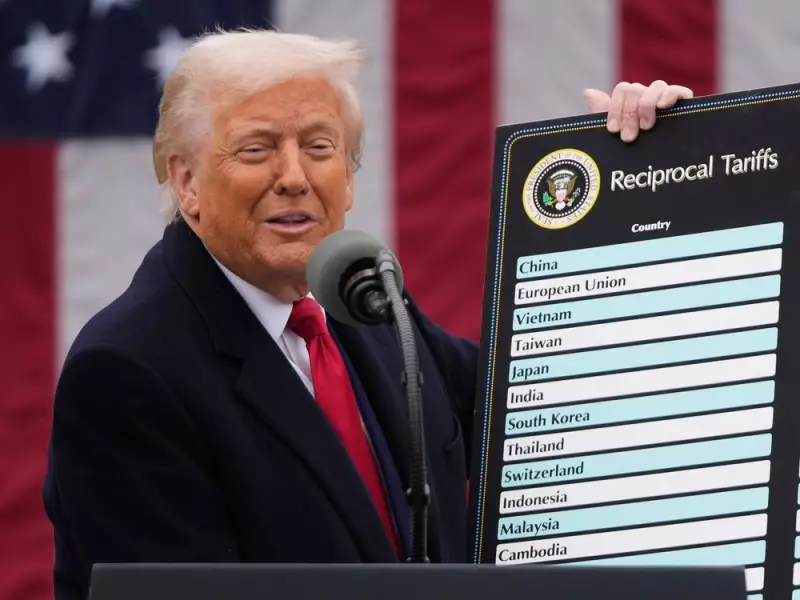
Donald Trump has established himself as the most tariff-active American president in over a century, yet a closer examination reveals a significant gap between his threats and actual implementation. While the former president has imposed more tariffs than any of his recent predecessors, only a fraction of his numerous threatened duties have materialized into concrete policy.
A Pattern of Unrealized Threats
The recent withdrawal of proposed tariffs on European nations concerning Greenland represents just the latest example of this pattern. Trump frequently wields the tariff weapon as a negotiating tool without necessarily following through. The accumulation of these unrealized threats has become substantial enough to warrant serious analysis from trade experts and international partners alike.
So far, the sweeping duties promised on nations including Mexico and Canada have not been delivered. Similarly, threatened tariffs on specific products such as semiconductors and foreign films remain unimplemented. The so-called "secondary tariffs" targeting countries that trade with United States adversaries, most recently Iran, have also failed to materialize despite repeated warnings.

The Credibility Question
Trump maintains that his readiness to deploy tariffs has provided the United States with significant advantages in trade negotiations. He argues this approach has helped secure concessions, access to critical minerals, and resolution of international conflicts. According to his perspective, even the threat of tariffs creates valuable leverage in diplomatic and economic discussions.
However, evidence suggests that trading partners are becoming increasingly familiar with Trump's maneuvers, potentially diminishing their effectiveness over time. "There's obviously a credibility issue the administration has with anyone it's negotiating with," observed Tim Meyer, a professor specializing in international trade at Duke University School of Law. "Other countries have read the playbook now. You let him announce a deal and you hope it goes away."
The Greenland Case Study
The recent Greenland episode illustrates this dynamic clearly. Trump vowed to levy duties on goods from European countries that opposed his claim to the self-ruling Danish territory, threatening rates starting at 10 percent in February and escalating to 25 percent by June unless an agreement was reached for what he termed "the Complete and Total purchase of Greenland."
These aggressive statements generated significant anger and dismay among America's European Union allies, who had negotiated a trade accord with the United States just last year. In response, European leaders indicated they would halt approval of that agreement. "In politics as in business, a deal is a deal," stated EU President Ursula von der Leyen. "When friends shake hands, it must mean something."
Retaliation and Resolution
The potential for retaliation has consistently influenced Trump's tariff decisions. In previous confrontations with China, the president initially imposed triple-digit tariff rates but substantially reduced them after Beijing threatened to block exports of crucial rare earth minerals. This pattern suggests that while Trump employs aggressive rhetoric, practical considerations often temper actual implementation.
Following the Greenland controversy, European leaders floated various countermeasures and provided Trump with a notably cool reception during his appearance at the World Economic Forum in Davos. Shortly thereafter, Trump announced an agreement that appeared to ease tensions, though details remain unclear. The president promised to reveal more about this framework in the coming weeks, maintaining his characteristic ambiguity about specific terms and timelines.

Broader Implications for Trade Policy
This approach to trade negotiations raises important questions about long-term effectiveness. While the threat of tariffs may produce short-term concessions, repeated failure to follow through could undermine American credibility in future negotiations. Trading partners may become increasingly skeptical of U.S. threats, potentially reducing their willingness to make meaningful concessions in anticipation that announced measures will not materialize.
The Trump administration defends its approach by arguing that European nations have failed to implement their own commitments under existing agreements. U.S. Trade Representative Jamieson Greer emphasized this perspective, stating that "the EU has failed to implement its commitments" despite rapid American moves to reduce tariffs. Greer further suggested that the United States and European Union have numerous foreign policy and economic matters outside their trade agreement that should be addressed separately rather than used as excuses for noncompliance.
As international trading relationships continue to evolve, the effectiveness of tariff threats as a primary negotiation tool remains uncertain. What appears clear is that trading partners are adapting their responses to Trump's distinctive approach, potentially reducing the impact of his tariff rhetoric over time while increasing the importance of actual implementation for maintaining credibility in global economic discussions.