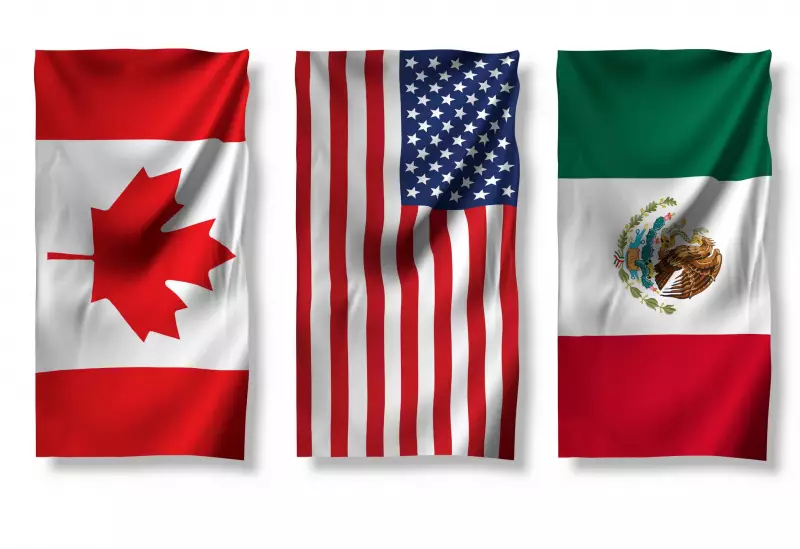
Recent aggressive foreign policy moves by the United States under former President Donald Trump are serving as a stark warning to Canada as crucial trade talks approach, according to a leading academic. Professor Drew Fagan of the University of Toronto's Munk School of Global Affairs and Public Policy has highlighted the potential implications for the Canada-United States-Mexico Agreement (CUSMA).
A Warning Shot from Venezuela
In a recent interview with BNN Bloomberg, Professor Fagan pointed to the Trump administration's involvement in Venezuela as a clear signal of its assertive international stance. He suggests this action is not an isolated event but rather a demonstration of a broader strategy that prioritizes American interests, often through unilateral and forceful means. This approach, Fagan argues, directly informs what Canada can expect as the periodic review and negotiation process for the critical CUSMA trade pact looms.
The core of Fagan's analysis is that the Venezuela precedent reveals a willingness to exert significant political and economic pressure to achieve desired outcomes. For Canada, a country deeply integrated with the U.S. economy, this translates into a potentially high-stakes environment at the negotiating table. The stability and terms of CUSMA are vital for countless Canadian industries, from automotive and agriculture to energy and services.

Navigating the CUSMA Review
The upcoming discussions on the trade agreement, which officially began its mandated review process, are now cast in a new light. Analysts like Fagan believe the U.S. delegation, influenced by the "America First" doctrine, may adopt a more hardline posture on contentious issues. These could include disputes over dairy market access, automotive rules of origin, digital trade, and environmental standards.
Professor Fagan's warning underscores the need for Canadian negotiators to prepare for a challenging dialogue. The strategy may require a careful blend of firm defense of national interests while seeking pragmatic compromises to preserve the essential framework of North American trade. The goal will be to avoid the kind of disruptive renegotiation that characterized the original shift from NAFTA to CUSMA.
Broader Implications for Canadian Foreign Policy
This situation extends beyond pure trade economics. It touches on the fundamental nature of Canada's relationship with its closest ally and largest trading partner. The Venezuela example illustrates a shift where traditional diplomatic channels and multilateral approaches may be sidelined in favor of direct power politics.
For Ottawa, the challenge is twofold: safeguarding economic prosperity linked to cross-border trade while also managing a bilateral relationship that is becoming increasingly complex and unpredictable. Experts urge the Canadian government to diversify its trade partnerships and bolster domestic economic resilience as part of a long-term strategy to mitigate over-reliance on any single market, even one as dominant as the United States.
As the CUSMA talks progress, the shadow of Washington's actions in Venezuela and elsewhere will likely hang over the proceedings. Professor Drew Fagan's analysis serves as a crucial reminder for policymakers and the public alike that international trade agreements are inextricably linked to the wider currents of global power and foreign policy.