Twin Cities Labor Movement Organizes Economic Blackout Against ICE Enforcement
Labor unions across the Minneapolis-St. Paul metropolitan area are mobilizing their members and the broader community for a significant demonstration of resistance this Friday. Union leaders are calling for a complete economic blackout—urging people neither to work nor to shop—as a powerful protest against President Donald Trump's intensified deportation campaign. This organized action represents a growing wave of opposition as U.S. Immigration and Customs Enforcement agents continue to conduct raids and confront demonstrators throughout Minnesota.
A Coordinated Response to Federal Immigration Crackdown
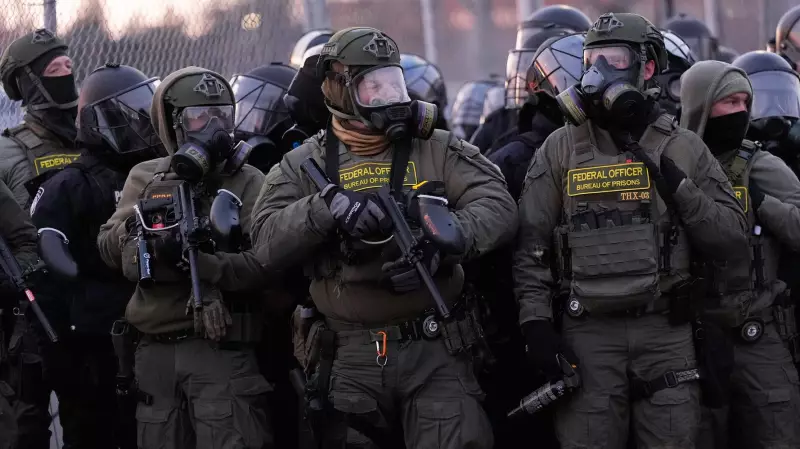
The White House has recently deployed thousands of Department of Homeland Security officers to Minnesota, effectively making the state the focal point of the administration's immigration enforcement strategy. In response, daily street protests have emerged, decrying what organizers describe as harsh and indiscriminate tactics. These include the tragic shooting of Renee Good, a 37-year-old mother of three, by an ICE agent earlier this month. The raids have reportedly swept up both noncitizens and citizens, with Minneapolis labor leaders alleging that agents have been systematically harassing service and construction workers during their commutes for weeks.
"Any self-respecting union has to be stepping up and doing everything it can around this," emphasized Kieran Knutson, president of Communications Workers of America Local 7250, one of several local labor groups endorsing the action. The unions believe a one-day halt to economic activity will boost protest turnout and deliver an unequivocal message to ICE that its presence is unwelcome in the region.

Union Members Directly Impacted by Enforcement Actions
The personal and professional toll on unionized workers has been severe. Greg Nammacher, president of Service Employees International Union Local 26, revealed that at least 20 of his union's members have been "detained or abducted" over the past month. SEIU Local 26 represents janitors, airport workers, and commercial building cleaners across the Twin Cities.
"It's just a complete disaster for our members' families, for our community, and for our union," Nammacher stated bluntly. Following Good's killing, the union convened a meeting to gauge willingness to participate in the January 23rd economic blackout. The response was nearly unanimous, with almost every member raising their hand in support.
"The response has been overwhelming," Nammacher noted. "We are very sad that we have to do this, but also it gives us hope to see how much of the community is stepping forward."
Broad Coalition Support and Community Mobilization
What began as an initiative by a handful of unions and faith groups has rapidly gained momentum. The protest, billed as a "day of truth and freedom," now enjoys the official backing of the Minneapolis Regional Labor Federation, an umbrella organization representing the area's unions. Dozens of local businesses are preparing to close for the day, with many restaurants already displaying supportive signs in their windows.
"I've been very impressed with how many employers understand this is an important moment of unity," Nammacher observed, adding that small business owners are weary of their employees facing harassment and their customer base dwindling due to widespread fear.
Given that workers under active collective bargaining agreements are typically prohibited from striking, unions have been carefully advising members to take the day off in accordance with their contract terms. Organizers have also advocated for a school closure, coinciding with a scheduled recordkeeping day for Minneapolis Public Schools.
Navigating Legal Constraints and Safety Concerns
Chelsie Glaubitz Gabiou, president of the Minneapolis Regional Labor Federation, acknowledged that many workers may feel unsafe demonstrating publicly due to the visible ICE presence. An afternoon march is planned near U.S. Bank Stadium, though participants may face subzero temperatures.

"We have been collectively mobilized in the streets and somehow that has not been enough," Glaubitz Gabiou explained. "So we need to call for an even larger mass mobilization to invite in the folks on the sidelines who have a stake in this, to be a part of the solutions to get ICE out of Minnesota."
She expressed disappointment at the business community's relative silence, likely stemming from fear of reprisal from the Trump administration. This fear was exemplified when the Department of Homeland Security publicly criticized Hilton Hotels on social media after a local Hampton Inn franchisee canceled reservations for ICE agents on principle, leading Hilton to sever ties with the franchisee.
Economic and Social Repercussions of Enforcement Focus
Glaubitz Gabiou warned that ICE's concentrated focus on Minnesota is inflicting substantial damage on the local economy, as businesses lose both workers and customers. "The amount of damage that's being done right now is not going to go away when they leave," she cautioned. "The road to recovery for Minneapolis is going to be long."
While the administration argues that deportations will raise wages for native-born workers, most labor leaders and numerous economists predict the opposite outcome. Nammacher highlighted how the climate of fear is undermining workers' ability to challenge exploitative employers. He cited the case of a non-union janitor who came forward to report wage theft, helping colleagues recover hundreds of thousands in back pay, only to be detained by immigration officials late last year and placed into deportation proceedings.
"All that does is lower the wages and working conditions for workers here in the U.S., whether they're born here or abroad," he asserted.
A Call for Peaceful Protest Amid Escalating Tensions
Mirroring appeals from local elected officials, Friday's protest organizers are urging participants to demonstrate peacefully. This call comes as President Trump has threatened to invoke the Insurrection Act and deploy military forces to Minnesota, with approximately 1,500 active-duty Army soldiers currently on standby.
Knutson characterized the federal presence in Minneapolis as an assault on "our own dignity." "Working-class people are being terrorized every day in the Twin Cities," he said. "But also working-class people are standing up to [ICE] all over Minnesota. That's what gives me heart."
This planned economic blackout stands as a pivotal test of community solidarity and labor power in the face of a federal immigration enforcement strategy that has profoundly disrupted life in the Twin Cities.