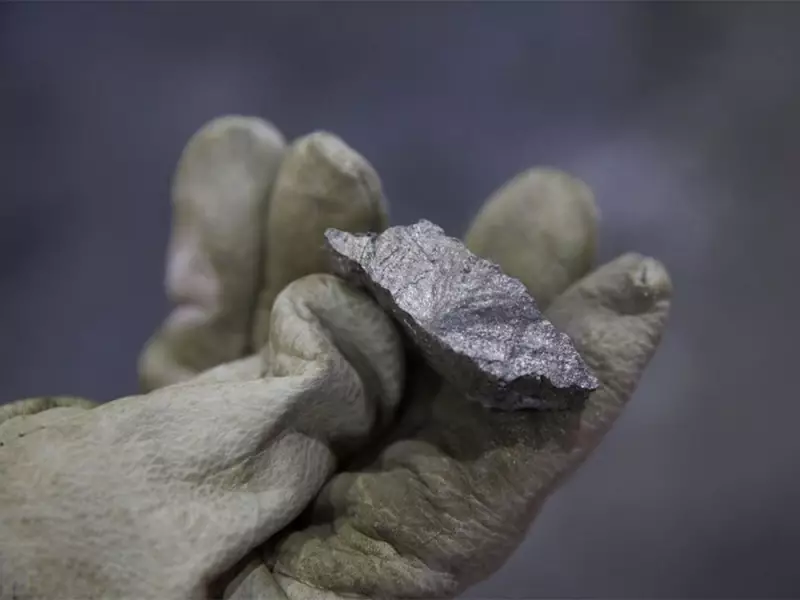
Canada stands at a pivotal moment in its economic history, facing what experts describe as an existential threat to both national security and industrial stability. The country's dangerous dependence on foreign adversaries for critical minerals has reached a breaking point, demanding immediate action to revitalize domestic mining and processing capabilities.
The Wake-Up Call: China's Strategic Move
On April 4, 2025, just days after former President Donald Trump implemented his 'Liberation Day' tariffs, China made a decisive move that shook global markets. The nation effectively weaponized its control over the global supply of critical minerals, rare earth elements, and the specialized magnets manufactured from them.
This calculated action revealed the Western world's vulnerable position. Even the Trump administration recognized the grave predicament created by decades of outsourcing essential supply chains to strategic competitors. The very materials needed for national defense and modern technology now flow through channels controlled by potential adversaries.

Canada's Mining Legacy and Current Challenges
Despite Canada's proud history as a global mining leader and knowledge economy powerhouse, the country has watched its competitive advantage erode over time. Where Canadian expertise once dominated international mining operations, the nation now follows rather than leads in critical mineral development.
The timing couldn't be more critical. As NATO and allied western nations commit to increasing defense spending to five percent of GDP, the rebuilding of industrial supply chains requires unprecedented amounts of these specialized minerals. The applications span both civilian and military uses, making them dual-use commodities of strategic importance.
These essential materials enable everything from military-grade optical night vision goggles using germanium to advanced aerospace applications requiring scandium. The technological infrastructure of modern society depends on reliable access to these resources.
Historical Context and China's Long Game
The current crisis stems from strategic decisions made decades ago. The late Chinese leader Deng Xiaoping famously declared in 1992 that "The Middle East has oil, China has rare earths," setting in motion a thirty-year plan to dominate global production.
While China benefited from abundant geological deposits, its true advantage came from massive investment in production scaling during an era when Western nations pursued outsourcing for economic reasons. During the 1990s and 2000s, when liberal economic interdependence appeared to be the prevailing model, this approach seemed rational.
China's economic transformation from distant competitor to dominant force caught Western nations unprepared. As China surpassed numerous Western markets throughout the 2010s, the United States began recognizing the emerging nation not as a benevolent economic partner but as a rising military challenger in the Western Pacific.
China's ambitions extend beyond regional dominance. Through initiatives like the Belt and Road Initiative, China has established strategic partnerships across the global south, securing access to raw materials while building soft power influence in international forums like the United Nations.
Concurrently, Western nations allowed their domestic mineral supply chains to deteriorate. This neglect represented a failure of strategic foresight, reminiscent of miscalculations following Russia's 2014 annexation of Crimea, when assumptions about economic interdependence preventing further aggression proved dangerously optimistic.
The parallel assumption that China would never actually weaponize its critical minerals dominance has now been shattered, leaving Canada and its allies scrambling to address fundamental vulnerabilities in their economic and defense infrastructures.