When a brilliant fireball streaked across the skies of southeastern Morocco last September, Mohamed Benitjit knew exactly what to do. The 52-year-old merchant immediately loaded his mobile phone with credit, packed a small bag containing essential supplies including a magnet, and prepared to embark on a treasure hunt for fragments from outer space.
"I just need to know where it landed," Benitjit explained from his village in Enzala, nestled at the foothills of the Atlas Mountains. "Information is everything in our trade. It doesn't come easy since whoever finds something likes to keep it for himself."
Morocco's Meteorite Hunting Economy
Benitjit represents one of many local entrepreneurs capitalizing on Morocco's emergence as a global hotspot for meteorite hunting. The North African kingdom has reported more meteorite falls than any other country over the past two decades, transforming what was once a casual hobby into a lucrative economic activity.

According to Hasnaa Chennaoui Aoudjehane, professor of meteoritics and planetary science at Hassan II University in Casablanca, approximately half of all scientific publications involving meteorites now feature specimens discovered in Morocco. The country of 38 million people has positioned itself as the world's leading destination for space rock enthusiasts and collectors.
The Lucrative Space Rock Market
The global meteorite market remains largely unregulated and fragmented, making comprehensive sales tracking challenging. However, price ranges reveal the substantial economic potential, with specimens trading for anywhere from hundreds of dollars on platforms like eBay to millions for significant pieces sold through prestigious auction houses such as Sotheby's and Christie's.
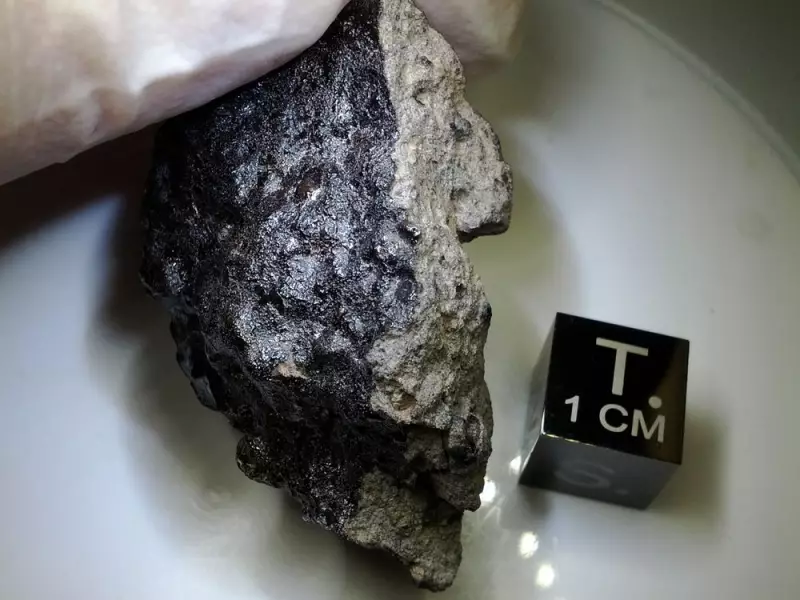
The celebrated Tissint Martian meteorite fragments, recovered from the Sahara Desert in 2011, demonstrate the market's upper echelons. These specimens commanded exceptionally high prices due to their confirmed Martian origin, freshness, and distinctive features including fusion crust and impact glass veins that verified their extraterrestrial journey.
Ideal Conditions and Supportive Policies
Morocco's appeal to meteorite hunters stems from multiple factors. The country's desert climate provides perfect preservation conditions for space rocks, while the barren landscape makes fragments easier to spot compared to vegetated regions. Additionally, Morocco maintains by far the least restrictive laws among meteorite-rich nations for the trade and export of space specimens.
This liberal approach aligns with broader government efforts to boost tourism and develop new revenue streams in remote areas where traditional pastoral activities face increasing challenges from climate change. Samira Mizbar, an independent socio-economist specializing in development policies, notes that meteorite hunting has evolved from "a hobby and a key part of the local heritage" into "an extractive activity in its own right" for thousands of Moroccans.
Meteorites typically fragment as they collide with Earth's atmosphere, and may shatter further upon impact. While thousands enter our atmosphere annually, only a tiny percentage are recovered, with most landing in oceans or inaccessible regions. Valuation depends on numerous factors including celestial origin, fall recency, and preservation quality, as prolonged exposure to Earth's elements can cause contamination or deterioration.
Most Moroccan discoveries involve pieces that fell years or even centuries ago. These extraterrestrial visitors originate from various sources throughout our solar system—including asteroids, the Moon, and Mars—and often contain valuable metals like cobalt, iron, and nickel that make them magnetic.
The diversity of finds includes carbonaceous chondrites rich in water, sulfur, and carbon-based organic compounds, alongside entirely new meteorite types that expand scientific understanding of materials in the asteroid belt. Guy Consolmagno, research astronomer and physicist who directs both the Vatican Observatory and The Meteoritical Society, confirms that Moroccan discoveries have significantly advanced planetary science knowledge.

As climate change continues to threaten traditional livelihoods in Morocco's remote regions, the unexpected economic opportunity presented by meteorite hunting offers a celestial solution to terrestrial challenges, creating a unique fusion of ancient desert traditions and cutting-edge space science.