Historic Kitsilano Faces Unprecedented Transformation with 28 New Towers
The cherished beachside neighborhood of Kitsilano in Vancouver is confronting what residents describe as a devastating transformation, with 28 new residential towers approved under the city's sweeping Broadway plan. This development threatens to erase the unique character of one of Metro Vancouver's most vibrant historic districts, displacing long-term residents and obliterating decades-old community spaces.
Forced Displacement Despite Widespread Opposition
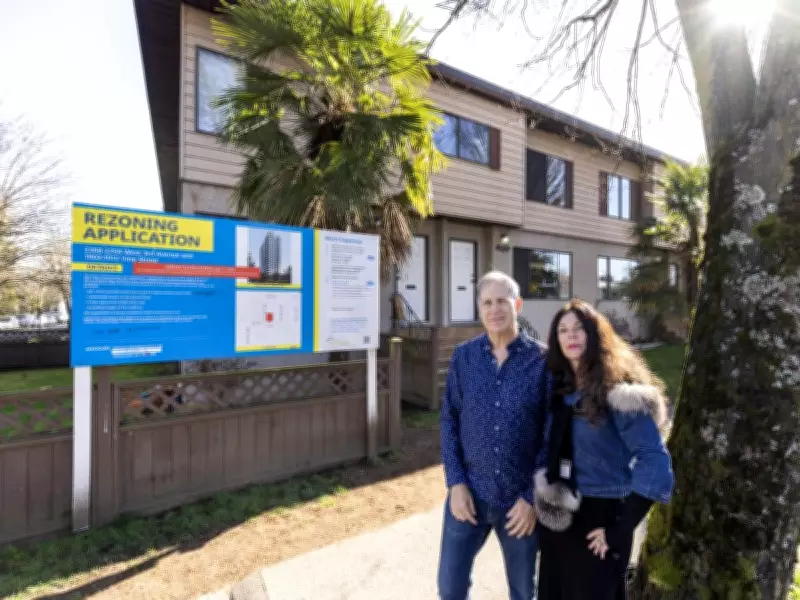
Alex and Barbara Downie represent just one of many heartbreaking stories emerging from Kitsilano. The couple faces eviction from the rental townhouse they have called home for 25 years, despite overwhelming public opposition to the 21-storey tower slated to replace their beloved complex. Remarkably, seven out of ten respondents told the City of Vancouver they opposed this specific development, yet Vancouver city council voted unanimously to proceed with demolition.
The unanimous vote crossed political lines, with politicians from right, left and center all supporting the Broadway plan's implementation. This has left residents questioning how such widespread public opposition could be so completely disregarded in the democratic process.

Broadway Plan's Sweeping Impact on Neighborhood Character
The City of Vancouver's Broadway plan extends far beyond individual buildings, encompassing what critics call "forced-fed generic zoning" across unique neighborhoods. According to Scot Hein, a retired architect and former City of Vancouver planner who lives in Kitsilano, the plan fundamentally misunderstands the area it seeks to transform.
"The Broadway plan process has been like taking a sickle and hacking through the off-Broadway blocks where people live, work and play," Hein explained. He argues the city has misled the public by labeling the area a "corridor," when in reality it encompasses diverse neighborhoods that have evolved in distinct ways over decades.
Unlike the more consistent Cambie corridor plan, Hein says the Broadway approach imposes homogeneous development on fundamentally different communities, disrespecting their unique histories and characters.
Massive Scale of Development
The transformation facing Kitsilano is staggering in scope:
- 28 new residential towers planned specifically for Kitsilano's eastern edge
- Buildings ranging from 18 to 30 storeys in height
- Kitsilano will absorb approximately one-fifth of all new large buildings in the Broadway corridor
- More than 160 large new buildings approved or proposed between Clark and Vine streets, and First and 16th avenues
This development will eliminate not only buildings but entire landscapes. Trees, shrubs, lawns, and half-century-old lowrise rental apartments will disappear, along with the reasonably affordable rents they provided to hundreds of long-term tenants.
Specific Buildings Facing Demolition
Among the dozens of structures slated for removal is the 21-unit Balfour Building at the southeast corner of West 3rd Avenue and Vine Street, home to the Downies and featuring a distinctive folksy courtyard. This location marks the western edge of what the city labels the "Broadway corridor" 500-block zone.
While future residents of the new towers may enjoy panoramic views of English Bay and Stanley Park, critics argue the highrises will be oversized, homogeneous structures that show disrespect for the neighborhood's established character and scale.
Broader Implications for Vancouver Development
The Kitsilano situation raises fundamental questions about urban planning priorities in Vancouver. As the city grapples with housing affordability and density targets, the Broadway plan represents a particularly aggressive approach that prioritizes new construction over neighborhood preservation.
Hein's criticism extends beyond individual buildings to the planning philosophy itself. "The creators of the Broadway plan made the mistake of imposing forced-fed generic zoning on a series of unique neighborhoods," he stated, emphasizing that each area within the plan's boundaries has developed its own distinct identity over time.

As construction looms, Kitsilano residents brace for what many describe as the destruction of their community's soul—replacing historic character with what they fear will become just another series of indistinguishable towers in Vancouver's rapidly changing urban landscape.