Ottawa's Unstable Soil Conditions Pose Major Construction Challenges
Ottawa's notoriously unstable soil conditions have long presented significant obstacles for architects and builders across the city. The presence of Leda clay, also known as sensitive clay, has forced construction professionals to fundamentally reconsider their approaches to building in the Canadian capital. This challenging geological reality has recently manifested in substantial setbacks for multiple construction projects in Ottawa's southern districts.
Police Station Project Faces Millions in Additional Costs
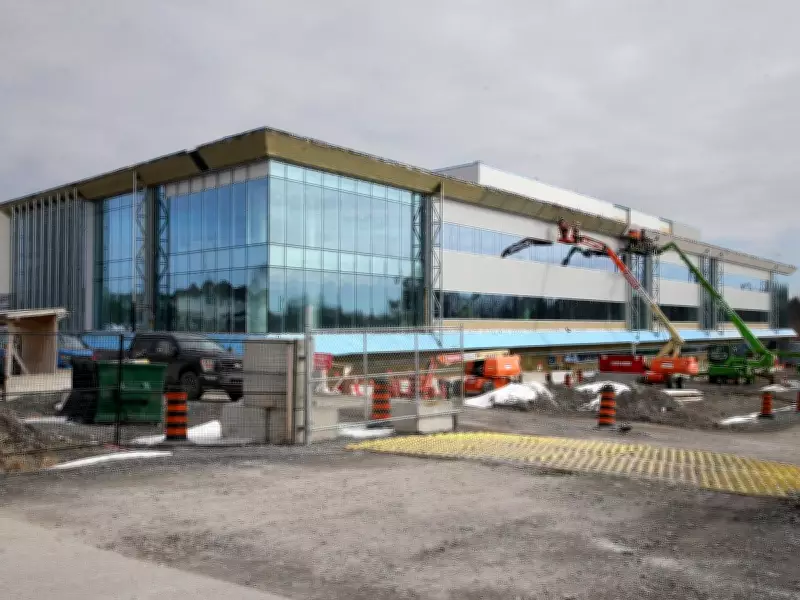
A new Ottawa Police Service station currently under construction on Prince of Wales Drive near the banks of the Rideau River has encountered serious delays and cost overruns directly attributable to unexpected soil conditions. Despite completion of geotechnical studies before construction began, reports indicate that "unforeseen" challenges emerged once crews broke ground at the Barrhaven site.
According to a March 27 report to the Ottawa Police Service Board's finance and audit committee, "unfavourable soil conditions extended the work associated with pile foundations at the start of construction." The report further stated that an additional $10 million in contingency costs is "directly attributable to the unforeseen soil conditions and indirect impacts of such." With soil-related issues now resolved early in the construction process, the building is expected to open in May 2027.

Amazon Warehouse Construction Also Experiences Setbacks
Just three kilometres north of the troubled police station project, another major construction development appears to be facing foundation-related difficulties. Amazon has confirmed that portions of a new 290,000-square-foot warehouse on Bill Leathem Drive are being dismantled, though the company has not specified the exact reasons for this action in response to questions from the Ottawa Citizen.
"Amazon has begun to disassemble portions of the existing structure and intend to rebuild in a manner that ensures that the building's design meets future requirements," a company spokesperson wrote in an official statement. Barrhaven East Councillor Wilson Lo added that the structure would be reassembled "following some foundation-related work."
Understanding Ottawa's Complex Geological Composition
While it remains unclear whether the Amazon warehouse issues are directly related to soil conditions, a comprehensive 190-page geotechnical investigation conducted by Medusa LP in 2021 documented the site's challenging subsoil composition. The report noted that the location contains "a silt and clay deposit of variable thickness, a clayey silt deposit, a glacial till deposit and ultimately bedrock."
The investigation specifically warned that "the exposed native subsoil will be extremely sensitive to disturbance by water, traffic and circulation of mechanical equipment." This sensitivity characteristic of Leda clay makes construction particularly challenging, as the soil can lose strength dramatically when disturbed.
Advancements in Soil Mapping and Predictive Analysis
Despite these ongoing challenges, construction professionals have made significant progress in understanding Ottawa's complex soil conditions. Emerging research has enabled more precise mapping of where exactly soft soil deposits are located throughout the city and how they may respond to building weight and construction activities.
This improved predictive capability has made digging into Ottawa's soil considerably more predictable than in previous decades. However, architects and engineers emphasize that Leda clay continues to present substantial challenges that require specialized approaches, careful planning, and contingency measures for major construction projects throughout the region.
The situation highlights the critical importance of comprehensive geotechnical investigations and adaptive construction methodologies when building on Ottawa's sensitive clay soils. As development continues to expand across the city, understanding and accommodating these unique geological conditions will remain essential for successful project completion within budget and timeline constraints.