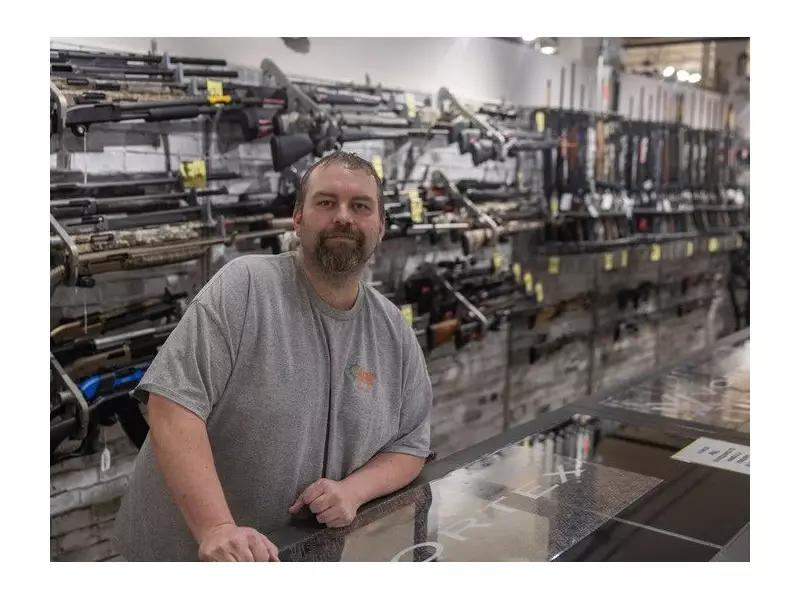
Saskatchewan Gun Shop in Limbo as Federal Buyback Program Enters New Phase
A Regina firearms retailer finds himself in a state of uncertainty as the federal government's buyback program for prohibited weapons enters a new declaration period for individual owners, while business owners like him remain in limbo.
Merchandise in Storage, Business in Limbo
Aaron Strauss, owner of Cache Tactical Supply Inc. in Regina, estimates he has over $50,000 worth of firearms sitting in his stockroom that he cannot legally sell or return. The merchandise became prohibited under Canada's expanding ban on assault-style weapons, including semi-automatic firearms with sustained rapid-fire capability.
"Those bans affected guns that we had on our walls," said Strauss. "So as soon as those were announced, they had to be taken off the wall, boxed up and they're sitting in the back in limbo right now."

For Strauss, this represents a significant sunk cost. He says firearms retailers were not adequately warned in advance about the expanding prohibitions, leaving them with inventory they cannot legally move through normal business channels.
New Declaration Period for Individuals
Public Safety Canada opened registration on January 19 for individuals to voluntarily relinquish their banned weapons under the Assault-Style Firearms Compensation Program. The declaration period runs until March 31, with compensation available on a first-come, first-served basis according to government guidelines.
However, this new phase of the program currently excludes business proprietors. The ASFCP website indicates it will reopen to businesses later this year, but no specific dates have been provided, leaving retailers like Strauss without clear options for their inventory.
Expanding Prohibitions Create Business Challenges
Canada's growing list of prohibited weapons has required three amendments to the Criminal Code:
- May 2020
- December 2024
- March 2025
An amnesty period expires on October 30 of this year, meaning anyone who has not safely discarded or permanently deactivated banned firearms by that date risks criminal charges.
Strauss did not participate in the first-round declaration period for businesses that ran from November 2024 to April 2025 because he wasn't selling firearms when the initial 2020 ban took effect. When he did begin dealing in firearms, some of his inventory was subsequently added to the government's expanding list of prohibited weapons.
Industry Frustration Grows
The situation has created frustration within Saskatchewan's firearms retail community. Larry Smith, manager of Saskatoon Gunsmith Shoppe, expressed similar concerns about the buyback program's implementation.
"I think the government's going about it all wrong," Smith said. "They should be going after the criminals, not the legal gun owner."
Smith described the buyback program as a "waste of time" from a business perspective, echoing the sentiment that the current approach creates unnecessary burdens for legitimate firearms retailers while failing to address core public safety concerns.
As the federal program moves forward with individual declarations, Saskatchewan gun shop owners continue to wait for clarity on how they can participate and recover value from their now-prohibited inventory. The uncertainty creates financial strain for small businesses already navigating complex regulatory environments in Canada's firearms industry.