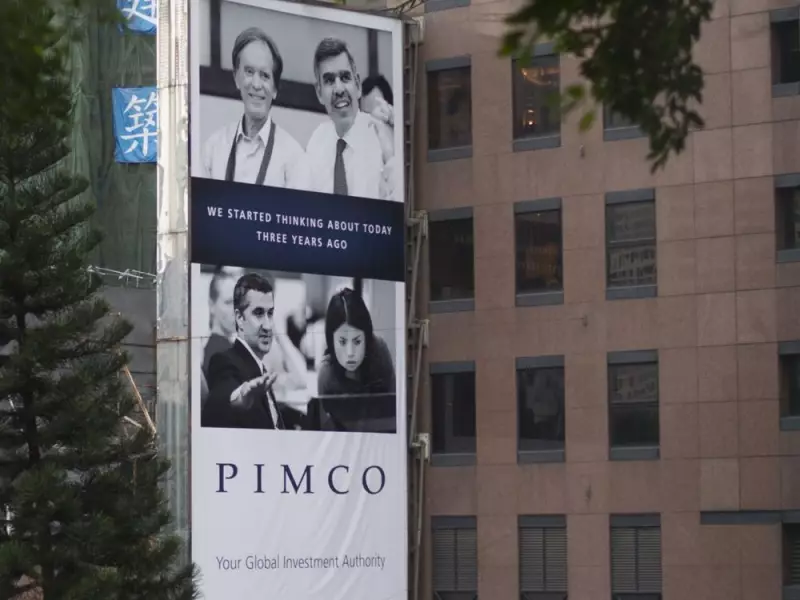
In a significant move reflecting deep-seated concerns on Wall Street, the global investment management firm Pimco is actively diversifying its portfolios away from United States assets. The firm cites the "unpredictable" policies of former President Donald Trump and his administration's attacks on the independence of the U.S. Federal Reserve as key drivers for this strategic shift.
A Multi-Year Diversification Strategy
Dan Ivascyn, the Chief Investment Officer of Pimco, revealed in an interview with the Financial Times that the $2.2 trillion fund manager is navigating a period of heightened market volatility. "It's important to appreciate that this is an administration that's quite unpredictable," Ivascyn stated. He emphasized that the firm's response is clear: "We're diversifying... We do think we're in a multiyear period of some diversification away from U.S. assets."
This cautious stance from one of the world's largest bond investors underscores a growing unease among financial institutions. The concern is not merely about short-term market fluctuations but the long-term structural consequences of political pressure on core economic institutions.

Fed Independence Under Scrutiny
The warnings from Pimco come amid a contentious environment surrounding the Federal Reserve. Recently, Fed Chair Jay Powell confirmed he is under federal investigation by the Trump administration's Department of Justice regarding a $2.5 billion renovation of the central bank's headquarters.
While major stock indices like the S&P 500 have remained near record highs, Wall Street executives view the probe as a dangerous precedent. There is a widespread belief that Trump's actions are an attempt to erode the Fed's traditional independence, potentially to influence borrowing costs.
JPMorgan Chase & Co. CEO Jamie Dimon publicly addressed the issue, cautioning, "Anything that chips away at [Fed independence] is probably not a great idea. And in my view, it will have the reverse consequence. It will raise inflation expectations and probably increase rates over time."
Long-Term Risks and Market Credibility
Ivascyn echoed Dimon's sentiment, stressing that Fed independence in setting monetary policy remains critically important for market stability. He warned that aggressive rate cuts in the face of strong economic growth and elevated inflation could backfire, ultimately leading to higher long-term interest rates.
A senior Wall Street trader, who requested anonymity to avoid political targeting, explained that the damage might not be immediately visible. "You're not going to see these things overnight, but in the eventuality there is a crisis or inflation expectations, that's when it will reveal itself," the trader said, highlighting fears that the Fed's credibility to manage future crises could be weakened.
Furthermore, executives speculate that the investigation into Powell may be less about the current chair and more about influencing his successor. With Powell's term ending in May 2026, there is apprehension that Trump could seek policy guarantees from the next nominee, further politicizing the central bank's role.
The collective apprehension from Pimco and other major financial players signals a pivotal moment. As one unnamed Wall Street CEO put it, "Trump is fighting the next war, not the last war." This strategic repositioning by a titan like Pimco suggests that for global investors, managing the risks of American political unpredictability is now a multi-year priority.